



What's Happening?
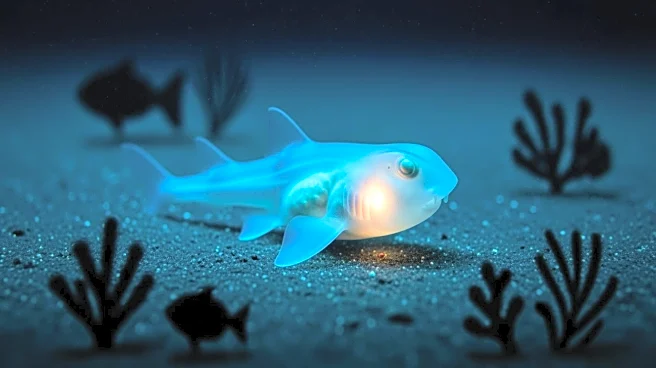
A new species of shark, the American pocket shark, has been discovered in the Gulf of Mexico. This small shark, measuring just 5.5 inches, is notable for its ability to glow in the dark due to light organs scattered across its skin. The discovery was
made by Mark A. Grace, a fisheries biologist at NOAA Fisheries, during a research cruise in 2010. The shark was initially collected and stored with other specimens, but its unique characteristics were only identified years later. The American pocket shark is part of a group of sharks rarely seen in research nets, and it features two small cavities near its gills, the function of which remains unknown.
Why It's Important?
The discovery of the American pocket shark underscores the rich biodiversity of the Gulf of Mexico and highlights how much remains to be learned about marine life in this region. It also emphasizes the importance of ongoing research and exploration in understanding and preserving marine ecosystems. The ability of the shark to produce light may offer insights into bioluminescence and its role in marine environments. This discovery could lead to further studies on the ecological roles of such species and their adaptations to deep-sea environments. It also highlights the potential for new species to be discovered in underexplored areas, contributing to our understanding of marine biodiversity.
What's Next?
Future research will likely focus on understanding the ecological role of the American pocket shark and its adaptations to its environment. Scientists may conduct further studies to explore the function of its light-producing organs and the mysterious cavities near its gills. There may also be efforts to locate and study live specimens in their natural habitat to gain a better understanding of their behavior and interactions within the ecosystem. Additionally, this discovery may prompt increased interest and funding for marine research in the Gulf of Mexico, potentially leading to more discoveries of new species.
Beyond the Headlines
The discovery of the American pocket shark highlights the importance of preserving marine habitats and the potential for new scientific insights from these environments. It also raises awareness about the need for sustainable practices in regions like the Gulf of Mexico, which are vital for both biodiversity and human economic activities. The study of such unique species can also inspire educational initiatives and public interest in marine biology and conservation. As researchers continue to explore the depths of the ocean, they may uncover more about the complex interactions and adaptations that define life in these extreme environments.