





What's Happening?
Kentucky State University researchers are collaborating with farmers across five Kentucky counties to study the effectiveness of regenerative agriculture practices. The project, titled “A Step Toward Regenerative Farming — Small-Scale Farming,” is led by
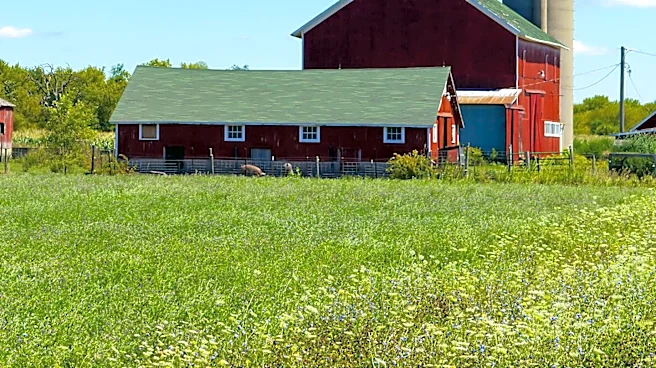
Dr. Maheteme Gebremedhin and funded by the U.S. Department of Agriculture’s Natural Resources Conservation Service. This initiative involves conducting trials directly on working farms, rather than solely on university plots, to assess how regenerative methods impact soil health and crop production under real-world conditions. A recent field day at Boulden Farms in Mason County showcased demonstrations of reduced tillage, cover crops, and biochar, a charcoal-like soil amendment. Farmers participating in the research, including J.R. Boulden, are providing valuable insights into the practical application and challenges of these practices. Early findings from the first full cropping season indicate that corn yields under reduced tillage were approximately 3.8% higher than conventional tillage, and soil carbon levels were about 4.6% higher. However, researchers emphasize that these are preliminary results, and further monitoring is necessary for long-term conclusions. The collaboration aims to translate university research into practical, locally relevant information for Kentucky’s agricultural communities.
Why It's Important?
This research is important for the U.S. agricultural sector as it directly addresses the growing interest in sustainable farming practices and their potential economic and environmental benefits. Regenerative agriculture, which focuses on restoring natural systems, offers a pathway to improve soil health, enhance biodiversity, and potentially meet future food demands. By conducting trials on working farms, Kentucky State University is providing farmers with evidence-based information tailored to their specific operational contexts, which can accelerate the adoption of these practices. Increased soil carbon levels, as observed in the preliminary findings, contribute to climate change mitigation by sequestering carbon from the atmosphere. Higher yields with reduced tillage could also lead to cost savings for farmers through decreased fuel consumption and labor, while improving the long-term productivity and resilience of their land. The involvement of the USDA-NRCS highlights a federal commitment to supporting sustainable agriculture, offering financial and technical assistance to landowners. This initiative could serve as a model for other states looking to bridge the gap between academic research and practical farm management, fostering a more sustainable and economically viable agricultural future.
What's Next?
The Kentucky State University research project will continue to monitor the long-term effects of regenerative agriculture practices on soil health and crop production. Researchers will gather additional data over subsequent cropping seasons to validate the preliminary findings and draw more definitive conclusions regarding the benefits and challenges of these methods. The ongoing partnership with farmers will facilitate continuous feedback and adaptation of research protocols, ensuring the relevance and applicability of the findings. Future field days and workshops are likely to be organized to disseminate results and provide training to a broader audience of farmers and agricultural stakeholders. The USDA-NRCS will continue to offer support and resources, potentially expanding programs that incentivize the adoption of successful regenerative practices. As more data becomes available, it could influence agricultural policies and funding priorities at both state and federal levels, encouraging wider implementation of these sustainable farming techniques across the U.S. The project's success could also inspire similar university-farmer collaborations in other regions, further advancing the understanding and adoption of regenerative agriculture.
Beyond the Headlines
Beyond the immediate agricultural benefits, this research into regenerative agriculture carries significant broader implications. Ethically, it represents a shift towards a more responsible stewardship of land, acknowledging the long-term health of ecosystems over short-term gains. The focus on improving soil health and biodiversity aligns with global environmental goals and addresses concerns about the ecological impact of conventional farming. Culturally, the collaboration between university researchers and farmers fosters a renewed sense of community and shared purpose, blending scientific expertise with traditional farming knowledge. This partnership can empower farmers to become active participants in agricultural innovation, rather than passive recipients of information. Legally, successful outcomes from such research could inform future regulations and incentives related to land use, conservation, and agricultural subsidies, potentially leading to policies that reward sustainable practices. Economically, the widespread adoption of regenerative agriculture could create new markets for specialized equipment, biochar production, and consulting services, while reducing reliance on synthetic inputs. This initiative also highlights the critical role of public institutions, like Kentucky State University and the USDA, in driving sustainable development and ensuring food security for future generations.