








What's Happening?
A court in Conakry, Guinea, has sentenced 22 former local officials and 202 miners to prison terms for their involvement in illegal gold mining. The former officials from Siguiri, a significant gold-producing region, received two-year sentences and fines
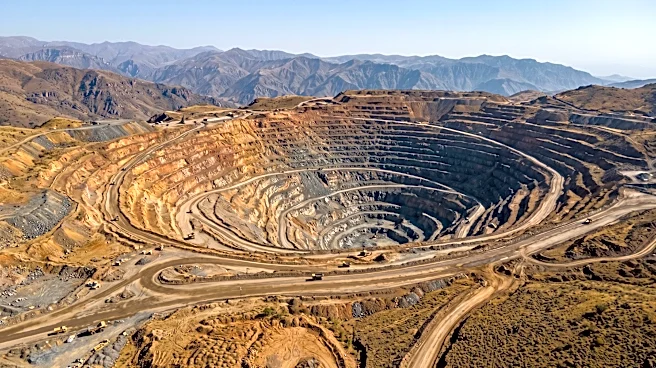
of 10 million Guinean francs (approximately $1,120) each for complicity in environmental degradation, destruction, and water pollution. The 202 illegal miners, including several foreign nationals, were handed three-year prison sentences for the same charges, plus illegal mining, and ordered to pay a combined fine of 10 billion Guinean francs ($1.1 million). Foreign nationals involved are also banned from Guinean territory for 10 years. This action is part of a broader government crackdown on unauthorized gold mining, which has led to the arrest of over 1,200 people in Siguiri this month. The crackdown aims to mitigate environmental damage, such as farmland destruction by heavy machinery and river pollution by chemicals. Recent clashes between protesters and security forces enforcing these restrictions resulted in 10 deaths and 13 injuries.
Why It's Important?
This crackdown highlights the severe environmental and social consequences of illegal gold mining in Guinea, a practice that, according to the U.N. Environment Program, has been the livelihood for over 300,000 people and attracted workers from across West Africa. The government's decisive legal action against both officials and miners underscores a commitment to enforcing environmental regulations and combating corruption within the mining sector. The substantial fines and prison sentences are intended to deter future illegal activities and protect Guinea's natural resources. However, the displacement of tens of thousands of miners and their families into neighboring Mali, as reported by Malian authorities, indicates a significant humanitarian impact and potential for regional instability. The violent clashes also reveal the deep-seated economic reliance on these activities and the challenges associated with transitioning communities away from them, posing a complex socio-economic dilemma for the Guinean government.
What's Next?
The Guinean government is expected to continue its efforts to curb illegal gold mining, potentially leading to further arrests and prosecutions. The long-term implications for the displaced populations, many of whom are now in Mali, will require international attention and humanitarian aid. The government will likely face the challenge of providing alternative livelihoods for those affected by the crackdown to prevent a resurgence of illegal mining and to address the socio-economic needs of its citizens. The environmental remediation efforts in affected areas, particularly in Siguiri, will also be a critical next step. The international community may increase its scrutiny of Guinea's mining practices and potentially offer support for sustainable development initiatives to mitigate the negative impacts of the crackdown and foster legal, environmentally responsible mining operations.
Beyond the Headlines
The situation in Guinea reflects a broader global challenge where resource-rich developing nations grapple with balancing economic development, environmental protection, and social equity. The involvement of foreign nationals in illegal mining operations points to transnational networks that exploit local resources and labor, often with detrimental environmental and social consequences. The government's response, while necessary for environmental preservation, also exposes the vulnerabilities of populations dependent on informal economies. This scenario raises questions about the responsibility of international bodies and developed nations in supporting sustainable resource management and ethical supply chains. The crackdown could serve as a precedent for other countries facing similar issues, emphasizing the need for comprehensive strategies that include law enforcement, economic alternatives, and community engagement to address the root causes of illegal resource extraction.