






What's Happening?
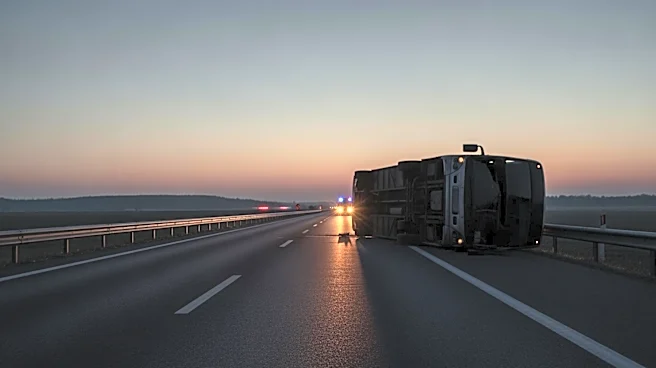
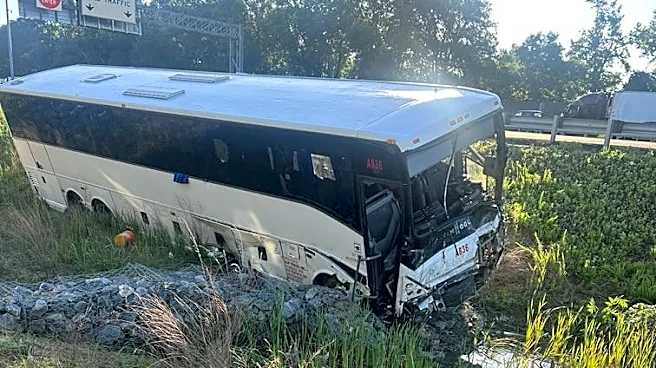
A tragic bus crash in Virginia has resulted in the deaths of five individuals and injuries to many others, raising significant concerns about the safety practices of the bus company involved and the driver’s history. The driver, Jing Sheng Dong, faces
charges of involuntary manslaughter and reckless driving. This incident has brought to light previous violations by Dong, including speeding convictions, which have not led to the revocation of his commercial driver’s license. The crash has prompted federal investigations into the driver’s background, the company that employed him, and the training school he attended. The National Transportation Safety Board (NTSB) is investigating the crash, highlighting the lack of collision-avoidance technology in commercial buses, despite longstanding recommendations for such safety measures.
Why It's Important?
The crash underscores ongoing safety issues within the commercial bus industry, particularly concerning driver qualifications and the implementation of safety technologies. The incident has sparked discussions about the enforcement of safety standards and the need for regulatory changes to prevent similar tragedies. The lack of mandatory collision-avoidance systems in buses, despite NTSB recommendations, points to a gap in safety regulations that could potentially save lives. The case also highlights the broader issue of driver fatigue and the enforcement of rest periods, which are critical for ensuring road safety. The outcome of this investigation could lead to stricter regulations and enforcement, impacting bus companies and their operational costs.
What's Next?
Federal investigators are expected to continue their examination of the driver’s history and the company’s safety practices. The findings could lead to regulatory changes or stricter enforcement of existing laws. The NTSB’s recommendations may gain renewed attention, potentially prompting legislative action to mandate safety technologies in commercial buses. The industry may face increased pressure to adopt advanced safety measures voluntarily to avoid future incidents and maintain public trust. The outcome of the legal proceedings against the driver could also influence industry standards and practices.
Beyond the Headlines
This incident highlights the ethical responsibility of bus companies to prioritize safety over cost. The reluctance to adopt recommended safety technologies due to financial considerations raises questions about the balance between profit and passenger safety. The case may also prompt a reevaluation of the training and monitoring of commercial drivers, emphasizing the need for comprehensive safety protocols. The broader implications for public transportation safety could lead to a cultural shift within the industry, prioritizing passenger safety as a fundamental business practice.