







What's Happening?
U.S. Senate Minority Leader Chuck Schumer, Senator Richard Blumenthal, and Representative Joe Morelle have introduced the No Payoffs For Pardons Act. This legislation aims to increase transparency and accountability in the presidential pardon process,
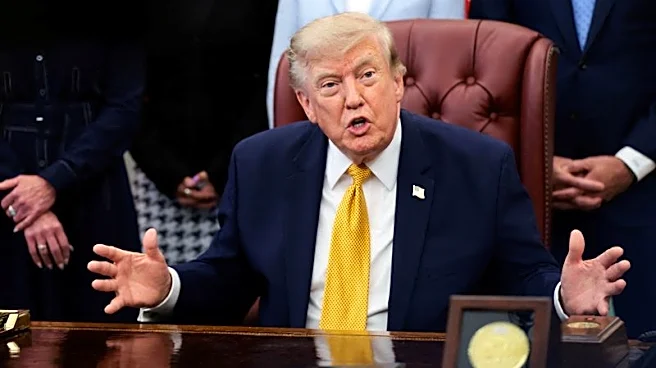
addressing concerns about potential corruption. The bill mandates that anyone receiving a pardon must disclose any significant value provided to the president or related entities, including donations to super PACs or private businesses. The legislation also equates corruptly paying for a pardon with bribing federal officials, ensuring legal consequences for such actions. This move comes in response to perceived abuses of the pardon power during President Trump's administration, where pardons were allegedly used to reward political allies and donors.
Why It's Important?
The introduction of this bill is significant as it seeks to restore integrity to the presidential pardon process, which has been criticized for being susceptible to corruption. By requiring transparency and equating the purchase of pardons with bribery, the legislation aims to prevent wealthy individuals from using their resources to evade justice. This could lead to a more equitable justice system where pardons are granted based on merit rather than financial influence. The bill also reflects broader concerns about the potential for political corruption and the need for reforms to safeguard democratic processes.
What's Next?
If passed, the No Payoffs For Pardons Act would establish new legal standards for the pardon process, potentially leading to investigations and legal actions against those who have engaged in corrupt practices. The bill's progress will likely be closely monitored by both political leaders and advocacy groups, as it addresses a critical aspect of executive power. The outcome of this legislative effort could influence future administrations and set a precedent for how presidential pardons are managed.