




What's Happening?
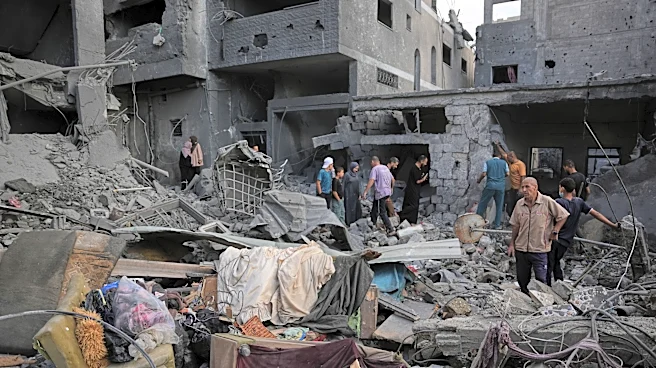
Children in the Gaza Strip are experiencing significant educational setbacks following nearly three years of conflict, leading to substantial gaps in reading, writing, and mathematics. Schools have been destroyed, and the psychological and living conditions
make consistent attendance difficult. Dr. Ahmed Kamal Junina, head of the English Department at Al-Aqsa University, observed that many children lack basic literacy skills. A UNICEF survey from December 2025 to January 2026, covering 2,071 households, found that 68% of children aged five to 11 participated in educational activities for three months or less between October 2023 and the survey period. This highlights the limited learning opportunities and the accumulation of learning losses. The situation is further complicated by unaddressed physical and psychological needs, such as those of Karim, a seven-year-old boy who struggled to participate in learning activities after losing his father and home, until he received psychological support and eyeglasses.
Why It's Important?
The extensive educational losses in Gaza have profound long-term implications for the region's future. A generation of children is at risk of growing up without fundamental literacy and numeracy skills, which can severely limit their future opportunities, economic prospects, and overall societal development. The destruction of educational infrastructure and the psychological trauma experienced by children and teachers create a complex challenge that goes beyond simply rebuilding schools. It requires comprehensive, multi-year recovery programs that address both academic gaps and the mental health needs of students. The inability to access consistent education perpetuates a cycle of instability and vulnerability, making it difficult for the community to rebuild and thrive. This situation underscores the critical need for sustained international support and localized, culturally sensitive educational interventions.
What's Next?
Addressing the educational crisis in Gaza will require multi-year programs focused on assessing individual learning levels and providing targeted remedial education. Experts suggest that recovery efforts must be designed for the long term, with continuous review of objectives and outcomes, rather than rushing to complete curricula. Key priorities include ending ongoing attacks, ensuring the safety of children and teachers, and providing secure learning environments. This involves repairing damaged schools and establishing temporary learning spaces while basic needs are met. Stable incomes and psychological support for teachers are also crucial, as they are essential partners in the recovery process. Meaningful participation from local education professionals and students' families is vital for developing effective recovery plans that are tailored to the specific needs and living conditions of the children.
Beyond the Headlines
The educational crisis in Gaza extends beyond mere academic deficiencies, touching upon the fundamental right to education and the psychological well-being of an entire generation. The disruption of schooling not only deprives children of knowledge but also of the social structures, routines, and interactions crucial for their development. The challenges faced by teachers, who are themselves affected by war and displacement, highlight the need for a holistic approach that supports both educators and students. This situation raises questions about the long-term societal impact of prolonged conflict on human capital and the potential for a 'lost generation.' The emphasis on diagnostic assessments and individualized learning plans underscores a shift from traditional educational models to more adaptive, trauma-informed approaches necessary in post-conflict settings, aiming to foster resilience and rebuild a sense of normalcy.