





What's Happening?
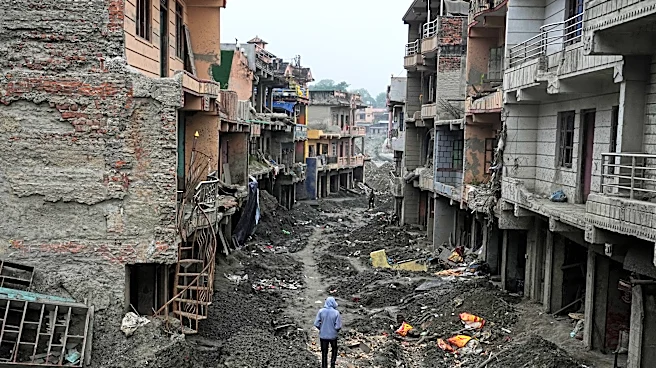
Sindh Chief Minister Murad Ali Shah presented the province's comprehensive climate resilience strategy at COP31, highlighting significant progress in post-2022 flood recovery. The province has initiated the world's largest post-disaster housing reconstruction
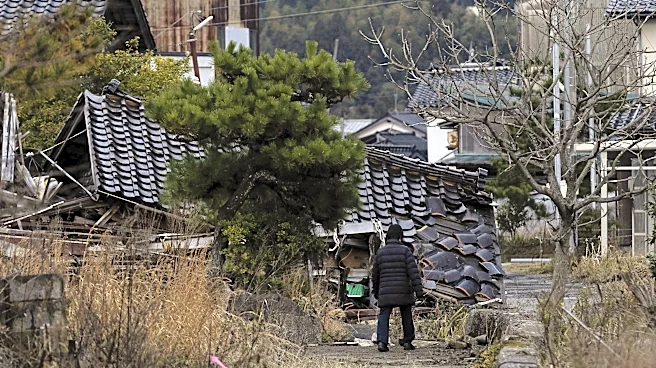
program, aiming to build 2.1 million climate-resilient houses for flood-affected families, with one million already completed and another 700,000 under construction. To facilitate this, over 42,000 community committees have been established, and 1.7 million bank accounts opened for direct financial assistance to beneficiaries, empowering women through property ownership and financial independence. Infrastructure rehabilitation includes reconstructing 205km of protective embankments, restoring 157,000 hectares of agricultural land, and strengthening the Manchar Lake protection system. Additionally, all 44 gates of Sukkur Barrage have been replaced, and 54 out of 65 gates at Guddu Barrage are completed, with full modernization expected by next year. The government is also rebuilding 5,811 flood-affected schools, rehabilitating 825 kilometers of roads, and restoring over 1,000 health facilities.
Why It's Important?
This extensive recovery and resilience effort in Sindh is crucial for the long-term stability and well-being of a significant population affected by climate change. The focus on climate-resilient housing and infrastructure aims to prevent future devastation, reducing the economic and social costs of natural disasters. Empowering women through property ownership and direct financial aid can lead to more equitable and sustainable recovery, fostering community-led development. The large-scale infrastructure projects, such as barrages and embankments, are vital for agricultural productivity and flood control, directly impacting food security and livelihoods. The initiative also serves as a model for other regions grappling with the impacts of climate change, demonstrating how comprehensive strategies can integrate housing, infrastructure, and social empowerment to build stronger communities. International cooperation and climate finance are essential for the success and scalability of such initiatives, underscoring the global responsibility in addressing climate vulnerabilities.
What's Next?
Sindh aims to complete the rehabilitation and modernization of its barrages by next year. The province is actively seeking international development partners and investors to support its climate initiatives through finance, modern technology, and investments in clean energy, water conservation, and climate-resilient infrastructure. The ongoing construction of 700,000 houses will continue, moving towards the target of 2.1 million climate-resilient homes. The government will also proceed with rebuilding schools, rehabilitating roads, and restoring health facilities. These efforts are part of a broader strategy to rebuild stronger and safer communities, emphasizing that vulnerable populations should not face the climate crisis alone. The outcomes of these projects will likely inform future climate adaptation strategies both domestically and internationally.
Beyond the Headlines
The Sindh province's approach to post-flood recovery extends beyond immediate relief, focusing on long-term climate resilience and sustainable development. The emphasis on direct financial assistance and women's empowerment in property ownership addresses systemic vulnerabilities and promotes inclusive recovery. This strategy acknowledges that climate change disproportionately affects developing countries, despite their minimal contribution to global emissions, highlighting a critical ethical dimension of climate justice. The integration of nature-based solutions, such as restoring mangrove forests, demonstrates a holistic understanding of environmental protection and carbon sequestration, contributing to global climate goals. The initiative also underscores the importance of robust international partnerships and equitable climate finance mechanisms to support large-scale adaptation efforts in regions most susceptible to climate impacts, potentially setting a precedent for global disaster recovery frameworks.