



What's Happening?
New Zealand police have successfully recovered a Fabergé egg pendant valued at $19,000, which was allegedly swallowed by a 32-year-old man during a theft at Partridge Jewelers in Auckland. The incident occurred on November 28, and the pendant was retrieved
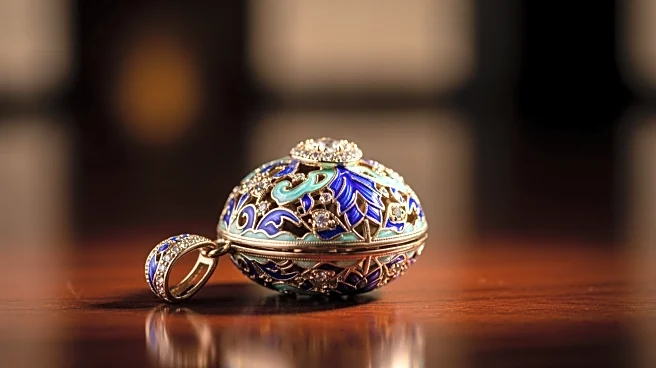
naturally from the suspect's gastrointestinal tract after six days of monitoring by the police. The pendant, inspired by the James Bond film 'Octopussy,' is a limited-edition piece crafted from gold, adorned with green enamel, 183 diamonds, and two sapphires. The suspect, who has not been publicly named, was arrested shortly after the alleged theft and has been in police custody since. He is scheduled to appear in Auckland District Court on December 8.
Why It's Important?
This incident highlights the lengths to which individuals may go to commit theft, as well as the challenges law enforcement faces in recovering stolen property. The recovery of the pendant without medical intervention demonstrates the effectiveness of police procedures in handling unusual situations. The case also underscores the value and allure of luxury items, which can be targets for theft. For the jewelry industry, such incidents may prompt increased security measures to protect high-value items. Additionally, the story draws attention to the legal and ethical responsibilities of law enforcement in ensuring the well-being of suspects in custody.
What's Next?
The suspect is due to appear in court, where legal proceedings will determine the outcome of the theft charge. The case may lead to discussions on security protocols in jewelry stores and the handling of suspects who ingest evidence. The jewelry store may also review its security measures to prevent similar incidents in the future. The outcome of the court proceedings could set a precedent for how such cases are managed legally and operationally.
Beyond the Headlines
This case raises questions about the ethical treatment of suspects who engage in extreme actions to conceal evidence. It also highlights the potential for luxury items to become central figures in criminal activities, prompting discussions on the cultural and economic factors that drive such crimes. The incident may influence public perception of law enforcement's role in balancing duty of care with the need to recover stolen property.