









What's Happening?
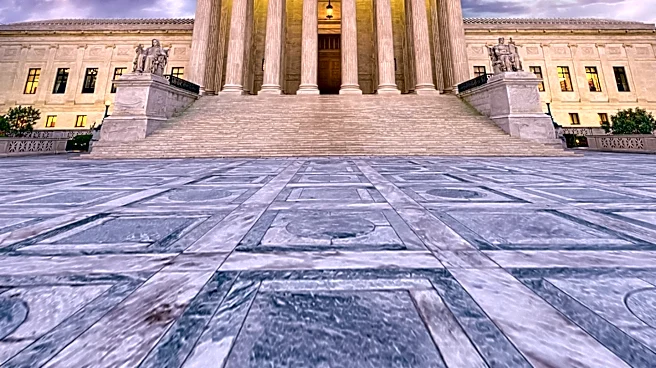
The Supreme Court has overturned a nearly century-old precedent, allowing the president to dismiss heads of independent agencies without cause. This decision stems from the case Trump v. Slaughter, where President Trump removed two Democratic members
of the Federal Trade Commission (FTC) before their terms ended. The court ruled 6-3 in favor of the president's authority, arguing that the FTC exercises executive power and must be under the president's control. This ruling is expected to impact other lawsuits from leaders of independent agencies who were dismissed by the president. Justice Sonia Sotomayor, in her dissent, warned that this decision could transform independent commissions into purely executive agencies, concentrating power in the president's hands.
Why It's Important?
This ruling significantly alters the balance of power between the executive branch and independent regulatory agencies. By allowing the president to dismiss agency heads without cause, the decision could lead to increased political influence over agencies that were designed to operate independently. This shift may affect how these agencies function, potentially impacting regulations and policies across various sectors, including finance, trade, and labor. The decision could also lead to increased turnover in agency leadership, affecting continuity and stability in regulatory oversight.
What's Next?
The ruling is likely to prompt further legal challenges and legislative responses as stakeholders assess its implications. Independent agencies may need to adjust their operations and governance structures to align with the new legal landscape. Additionally, political leaders and advocacy groups may push for legislative measures to restore some level of independence to these agencies. The decision could also influence future presidential administrations' approaches to agency oversight and appointments.