







What's Happening?
Justice Brett Kavanaugh of the U.S. Supreme Court has denied an emergency request from a group seeking to place a proposal on the Michigan ballot that would require voters to prove their citizenship status. The proposal, put forth by Americans for Citizen
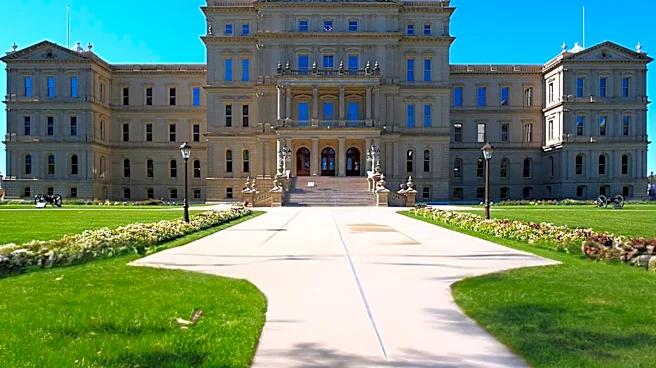
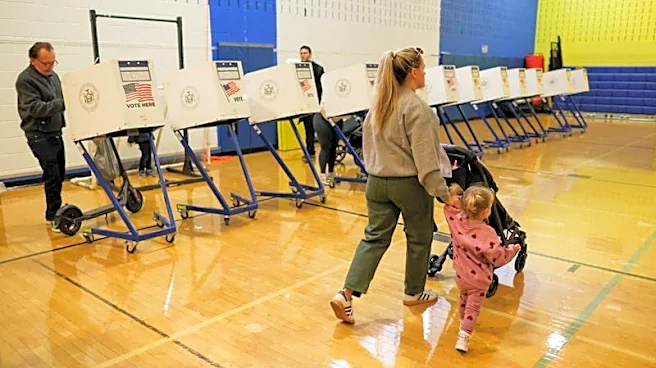
Voting (ACV), aimed to clarify that only U.S. citizens can vote in Michigan elections, mandate photo identification for voters, require the Secretary of State to verify citizenship, and implement systematic reviews of voter rolls. The legal challenge arose after the Michigan Board of State Canvassers reached an impasse, with its two Republican and two Democratic members unable to agree on the validity of the submitted signatures. ACV claimed there was sufficient evidence to qualify the proposal, but the board could not certify it. Following Justice Kavanaugh's denial, the Michigan Supreme Court also rejected ACV's request, stating that the Board of State Canvassers acted within its rights. This decision makes it unlikely the proposal will appear on the November ballot.
Why It's Important?
This decision is significant for U.S. election integrity debates and state-level ballot initiatives. The Americans for Citizen Voting proposal sought to introduce stricter voting requirements in Michigan, reflecting a broader national conversation about voter access versus election security. Had the proposal been approved, it could have set a precedent for similar measures in other states, potentially impacting voter turnout and the demographic composition of the electorate. Opponents of such measures often argue they disproportionately affect minority groups and low-income individuals, while proponents emphasize the importance of preventing non-citizen voting. The denial by both the U.S. Supreme Court and the Michigan Supreme Court underscores the legal hurdles and judicial scrutiny faced by efforts to alter established voting procedures, particularly close to an election. The outcome also highlights the power of state canvassing boards and supreme courts in determining ballot access, even when faced with federal appeals.
What's Next?
With the denial from both the U.S. Supreme Court and the Michigan Supreme Court, the Americans for Citizen Voting proposal will not appear on the November ballot. ACV Chairman Paul Jacob expressed disappointment, criticizing the process as being driven by partisan considerations rather than law and evidence. Kristin Combs, a spokesperson for ACV, stated that the campaign fought until the last moment for the signers' voices to be heard. Justice Noah Hood of the Michigan Supreme Court, while agreeing with the court's opinion, sympathized with criticisms of the process, suggesting that the Legislature consider revising the state's election laws to require earlier deadlines for petition reviews. This could allow for more meaningful adversarial proceedings and judicial review in the future. The Michigan House of Representatives has launched a select committee to review the ballot proposal certification process and will provide recommendations on potential changes, with majority House Republicans critical of how the ACV proposal was handled.
Beyond the Headlines
The rejection of the Michigan citizen voting proposal by both state and federal courts delves into deeper implications regarding the balance of power between citizen-led initiatives, administrative bodies, and the judiciary. The debate over voter identification and citizenship verification touches upon fundamental questions of democratic participation and the definition of the electorate. The ACV's argument of bias in the certification process and the timing of signature reviews highlights potential vulnerabilities in the current system, where administrative delays can effectively derail ballot initiatives regardless of their popular support. This case also reflects the ongoing tension between efforts to expand voting access and those aimed at tightening election security, a divide that often falls along partisan lines. The call for legislative reform to address review timelines suggests a recognition of systemic issues that could impact future ballot proposals, regardless of their content, and points to a need for clearer, more efficient processes to ensure fairness and public trust in the electoral system.