


What's Happening?
Recent research has uncovered significant similarities in the way brains of mice and humans age, potentially offering new insights into age-related cognitive decline. Scientists used functional magnetic resonance imaging (fMRI) to study the brains of 82
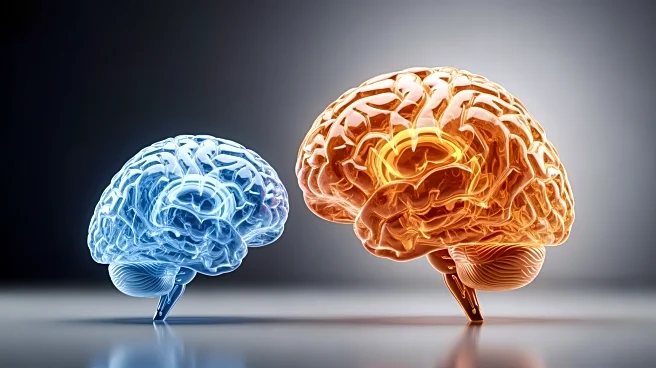
mice over their lifespans, which correspond to human ages from 18 to 70 years. The study, published in the Proceedings of the National Academy of Sciences, found that both mice and humans experience a decline in the specialization of brain modules as they age. This decline is associated with memory loss and cognitive deterioration. The research suggests that while human brains have a greater integration across networks, this may also make them more susceptible to cognitive decline compared to mice. The study also noted that the communication between brain modules in mice is less than in humans, which could influence how aging affects cognitive functions.
Why It's Important?
This research is significant as it provides a model for understanding the mechanisms of brain aging, which could lead to the development of new therapeutic strategies for age-related cognitive disorders. By identifying the similarities in brain aging between mice and humans, scientists can use mice as a model to test interventions that might slow or alter the trajectory of cognitive decline. This could be particularly beneficial in developing treatments for diseases like Alzheimer's. The ability to study these processes in mice, which have shorter lifespans, allows for quicker observation of the effects of potential treatments, offering a more efficient path to understanding and mitigating human cognitive decline.
What's Next?
Future research will likely focus on exploring the genetic factors that influence brain aging in different types of mice, as the current study only examined one type. Understanding these genetic influences could provide further insights into the variability of aging processes and help tailor more effective interventions. Additionally, researchers may investigate how lifestyle factors, such as diet, impact brain aging in mice, which could inform human studies. The integration of cellular and network-level studies in mice is expected to enhance the development of therapeutic approaches that are applicable to humans.
Beyond the Headlines
The study highlights the potential for using animal models to bridge the gap between cellular-level research and clinical applications in humans. This approach could revolutionize how scientists develop treatments for cognitive decline, emphasizing the importance of understanding brain networks rather than just cellular changes. The ethical implications of using animal models in research also come into play, as this study underscores the necessity of such models in advancing human health.