




What's Happening?
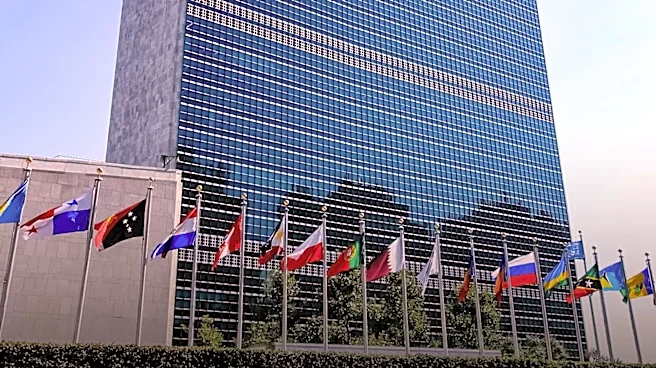
Sudan's Chargé d'Affaires a.i. to the Permanent Mission of Sudan to the United Nations in New York, Ambassador Abuzaid Shamseddin, recently met with the UN Special Envoy for the Horn of Africa, Guang Cong. The discussions focused on developments within
Sudan, particularly the positive steps taken by the Sudanese government concerning the Abyei area. These steps include the resumption of meetings for the Joint Political and Security Mechanism, the establishment of a higher committee chaired by a member of the Transitional Sovereignty Council (TSC), and the appointment of a new chairperson for the Joint Oversight Committee. Additionally, the meeting addressed broader developments in the Horn of Africa region, emphasizing the critical importance of de-escalation, adherence to international law, respect for state sovereignty, and fostering good-neighborly relations. The UN envoy acknowledged Sudan's efforts, reiterating that dialogue and de-escalation are the most effective means to achieve regional stability.
Why It's Important?
This meeting underscores the ongoing international efforts to promote peace and stability in a geopolitically sensitive region. The Abyei area, a disputed territory between Sudan and South Sudan, has historically been a flashpoint for conflict, and any progress towards its stabilization is crucial for regional security. The emphasis on de-escalation and respect for international law by both Sudanese and UN officials highlights a shared commitment to resolving disputes through diplomatic channels rather than military confrontation. For the United States, stability in the Horn of Africa is vital due to its strategic location, proximity to critical shipping lanes, and the potential for regional conflicts to exacerbate humanitarian crises or create havens for extremist groups. The UN's continued engagement, as represented by the Special Envoy, signifies the international community's recognition of the complex challenges in the region and the need for sustained diplomatic pressure and support for local initiatives.
What's Next?
The discussions suggest a continued focus on diplomatic engagement and the implementation of mechanisms designed to foster stability in Abyei and the wider Horn of Africa. Future steps will likely involve further meetings of the Joint Political and Security Mechanism and the Joint Oversight Committee to solidify the progress made. The UN Special Envoy will likely continue to facilitate dialogue between regional actors, advocating for de-escalation and adherence to international norms. The international community will be watching for tangible outcomes from these initiatives, particularly regarding the long-term status of Abyei and the broader security landscape in the Horn of Africa. The success of these efforts could serve as a model for resolving other protracted conflicts in the region, potentially leading to increased foreign investment and humanitarian aid.
Beyond the Headlines
Beyond the immediate political and security implications, the stability of Abyei and the Horn of Africa has profound humanitarian and economic dimensions. Prolonged instability has led to significant displacement, food insecurity, and hindered economic development. Successful de-escalation and the establishment of good-neighborly relations could unlock the region's economic potential, facilitating trade and investment. Furthermore, the emphasis on state sovereignty and international law reinforces the principles of a rules-based international order, which is critical in an era of increasing geopolitical competition. The UN's role as a mediator and facilitator in such complex regional disputes highlights the enduring importance of multilateral institutions in addressing global challenges that transcend national borders.