

What's Happening?
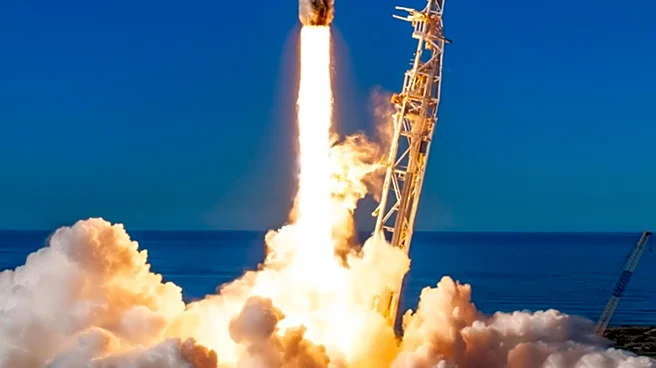
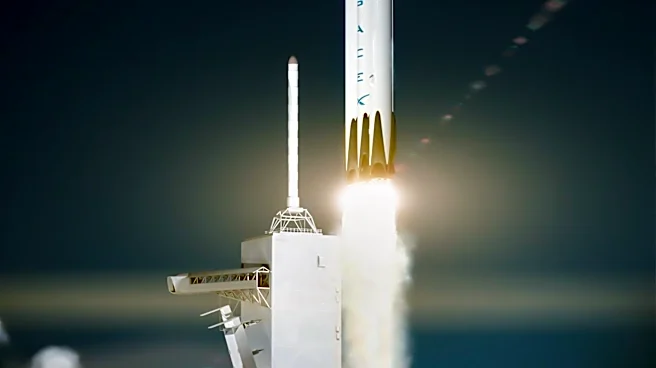
NASA, in collaboration with SpaceX, is tracking a used Falcon 9 upper stage from a commercial mission that is expected to impact the Moon near the Einstein and Bell craters. This event, scheduled for August 5, poses no threat to Earth. The impact is anticipated
to create a crater approximately 60 feet wide and 12 feet deep, dispersing dust and rock. NASA plans to collect data from this impact to enhance understanding of lunar geology and refine models for future exploration. The impact will not be visible to the naked eye, but NASA will attempt to observe it using ground-based telescopes and space-based assets. The Lunar Reconnaissance Orbiter and South Korea's Korea Pathfinder Lunar Orbiter will also seek to capture images of the site before and after the impact.
Why It's Important?
This event is significant as it provides NASA with a unique opportunity to study the effects of artificial impacts on the Moon's surface. By observing the behavior of ejecta plumes, scientists can gain insights into the Moon's geological processes, which are crucial for planning future lunar missions. The data collected will help refine models that guide exploration and scientific missions, contributing to a deeper understanding of the Moon's environment. Additionally, this event underscores the importance of responsible space debris management and the potential benefits of controlled impacts for scientific research.
What's Next?
NASA will continue to monitor the trajectory of the rocket stage and collect data from the impact. The Meteoroid Environments Office at NASA's Marshall Space Flight Center will use telescopes to image the impact, although weather and lighting conditions may affect visibility. The Lunar Reconnaissance Orbiter and the ShadowCam instrument will attempt to capture images of the impact site, with data availability depending on lighting, orbital timing, and spacecraft position. The findings from this event will inform future lunar exploration strategies and contribute to the development of safer and more efficient space missions.