







What's Happening?
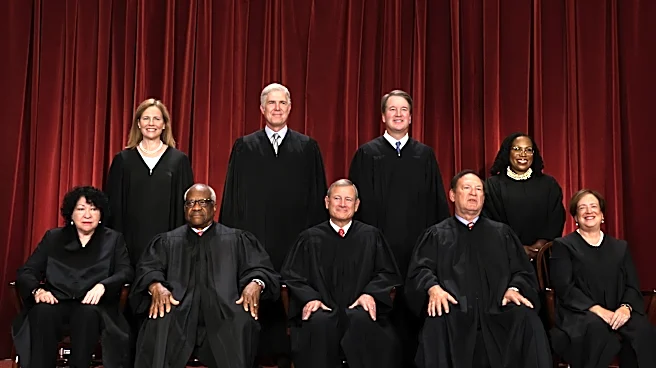
Justice Sonia Sotomayor has issued a strong opinion criticizing Chicago's civil asset forfeiture practices, labeling the city's scheme as 'vast and lucrative.' This comes in the context of a Chicago man losing his car over two parking tickets, despite
not being the owner but merely a co-signer on the loan. The case highlights how the city's ordinance allows for the seizure of property without due process, even from individuals who do not directly owe the debt. The speaker in the source discusses instances like Ryan O'Donnell, whose car was sold for scrap, and Michael Gore, whose car was taken despite no outstanding tickets. The city justifies these actions as an exercise of police power, but critics argue it functions as a form of debt collection, enabling the government to seize property without proper legal proceedings.
Why It's Important?
This situation underscores significant concerns regarding due process and property rights for U.S. citizens. The city's use of civil asset forfeiture, as described, allows for the taking of personal property under a legal loophole, potentially impacting individuals who are not directly responsible for the initial infraction. Justice Sotomayor's strong dissent brings national attention to these practices, suggesting a potential overreach of governmental power. If such practices are allowed to continue unchecked, they could set a precedent that erodes fundamental protections against arbitrary seizure of assets. This could disproportionately affect lower-income individuals or those with limited legal resources, who may struggle to reclaim their property or challenge the city's actions, leading to financial hardship and a loss of trust in legal systems.
What's Next?
The ongoing discussion surrounding Chicago's civil asset forfeiture practices, amplified by Justice Sotomayor's opinion, could lead to increased scrutiny of similar ordinances nationwide. Legal challenges and advocacy efforts may intensify, pushing for reforms that ensure stronger due process protections in civil asset forfeiture cases. There might be legislative attempts at both state and federal levels to amend laws that permit property seizure without a criminal conviction or clear evidence of direct involvement in an offense. Public awareness campaigns could also emerge, educating citizens about their rights and the mechanisms available to challenge such seizures. The outcome of this debate could influence how municipalities across the U.S. handle minor infractions and debt collection, potentially leading to more equitable and transparent legal frameworks.
Beyond the Headlines
The deeper implications of this issue extend to the balance of power between government entities and individual citizens. The 'vast and lucrative' nature of civil asset forfeiture, as described by Justice Sotomayor, raises ethical questions about whether these practices are primarily revenue-generating tools rather than genuine public safety measures. It also highlights a potential erosion of the principle that individuals are innocent until proven guilty, as property can be seized without a criminal conviction. This could foster a climate of distrust between communities and law enforcement, particularly in areas where such practices are aggressively applied. The legal precedent set by allowing such loopholes could also be expanded to other areas, potentially impacting a broader range of civil liberties and property rights in the future.