










What's Happening?
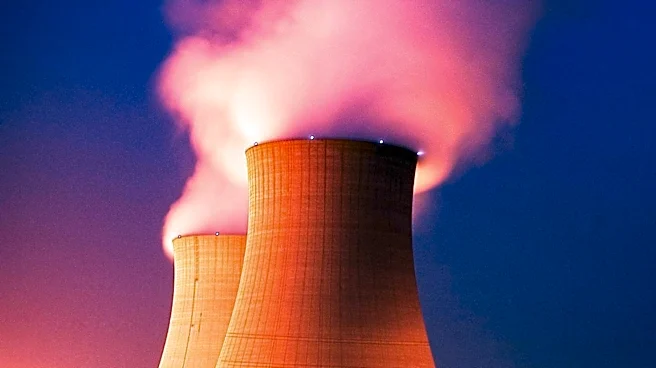
Rosatom, Russia's nuclear entity, is facing financial difficulties, leading to cuts in its investment program and operating costs. This situation affects its agreements to build nuclear plants in Kazakhstan and Uzbekistan, raising doubts about project
timelines and completion. Rosatom's challenges are linked to Russia's financial strain due to the ongoing campaign in Ukraine and international sanctions. Kazakhstan and Uzbekistan are exploring alternatives, including partnerships with Chinese companies and the United States for developing small modular nuclear plants.
Why It's Important?
Rosatom's financial woes have significant implications for Central Asia's nuclear energy ambitions, potentially delaying projects and prompting countries to seek alternative partners. The situation highlights the geopolitical and economic factors influencing nuclear energy development, as nations navigate complex international relations and financial constraints. The shift towards alternative partnerships may accelerate the adoption of advanced nuclear technologies and diversify energy sources in the region.
What's Next?
Kazakhstan and Uzbekistan may intensify efforts to secure partnerships with other countries, such as China and the United States, to advance their nuclear energy plans. The evolving geopolitical landscape and Rosatom's financial situation will continue to impact nuclear energy development in Central Asia. The region's pursuit of energy diversification and sustainability may lead to increased collaboration and innovation in nuclear technology.