



What's Happening?
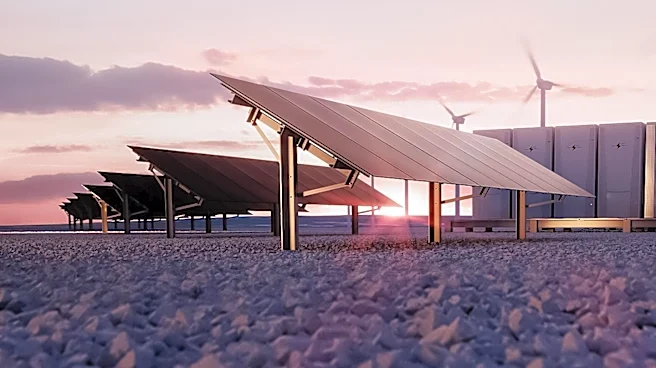
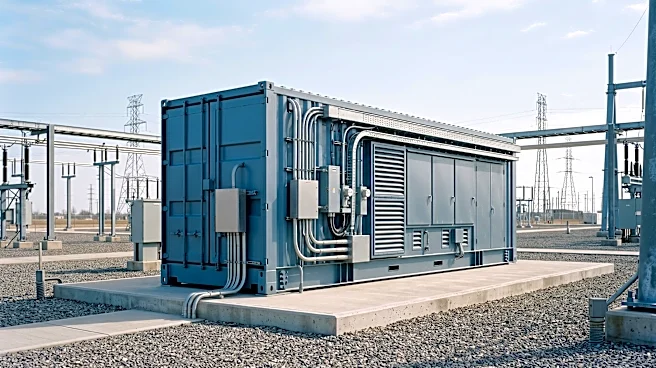
Across the U.S., communities are increasingly opposing the construction of large-scale battery energy storage systems (BESS), commonly known as battery farms, despite their critical role in stabilizing the grid and supporting renewable energy. The electricity
stored by these systems has grown tenfold since 2022 and is projected to double again by 2028. However, residents express concerns about the risk of fires and toxic smoke, leading to nearly 200 communities enacting or proposing moratoriums to block these facilities. A notable incident involved the Moss Landing Power Plant in California, which caught fire in early 2025, releasing toxic metals. While industry leaders assert that modern systems are significantly safer, with a 97% reduction in failures since 2018 due to updated designs and isolated modular containers, local activists remain wary. Developers often seek state-level approval to bypass local opposition, highlighting a growing conflict between energy infrastructure needs and community concerns.
Why It's Important?
The widespread community opposition to battery farms poses a significant challenge to the U.S.'s energy transition and grid modernization efforts. Battery storage is deemed essential by state lawmakers and renewable energy advocates for integrating intermittent renewable sources like solar and wind, ensuring grid stability, and meeting peak energy demands. The reluctance of communities to host these facilities could slow down the deployment of critical infrastructure needed to achieve clean energy goals and prevent blackouts. This conflict highlights a disconnect between national and state-level energy policies and local concerns regarding safety and environmental impact. The industry's argument that modern systems are safer, with fire risks comparable to electrical transformers, often fails to alleviate public fear, especially given past incidents. The trend of developers bypassing local jurisdictions by seeking state approval could lead to increased legal and political battles, further complicating the expansion of battery storage capacity.
What's Next?
The ongoing tension between the need for battery energy storage systems and community resistance is likely to escalate, prompting various responses from stakeholders. Industry leaders will likely intensify efforts to educate the public on the safety advancements in modern BESS technology and engage more proactively with local communities to address concerns. Policymakers at state and federal levels may consider developing clearer guidelines and incentives for siting these facilities, potentially including stricter safety regulations and community benefit agreements. The trend of developers seeking state-level approval to circumvent local moratoriums could lead to legislative actions aimed at either streamlining or restricting such bypasses. Research into even safer battery chemistries and storage methods will continue to be a priority to further mitigate risks and build public trust. Ultimately, finding a balance between energy security, environmental goals, and community acceptance will be crucial for the successful deployment of battery farms across the U.S.
Beyond the Headlines
The debate surrounding battery farms extends beyond immediate safety concerns, touching upon broader themes of environmental justice, local autonomy, and the social contract of energy infrastructure development. Communities, particularly those near proposed sites, often feel marginalized in decision-making processes, leading to accusations of developers imposing projects without adequate local input. This raises ethical questions about who bears the burden of new energy infrastructure and how benefits are distributed. The 'not in my backyard' (NIMBY) phenomenon, while understandable, can inadvertently hinder progress towards national climate goals. The conflation of battery farms with data centers, which also face community backlash, further complicates public perception, despite their differing impacts on the grid. This situation underscores the need for transparent communication, robust community engagement, and potentially innovative siting solutions that prioritize both safety and equitable distribution of energy infrastructure. The long-term success of the clean energy transition in the U.S. will depend not only on technological advancements but also on effective strategies for building public trust and achieving social license for new projects.