


What's Happening?
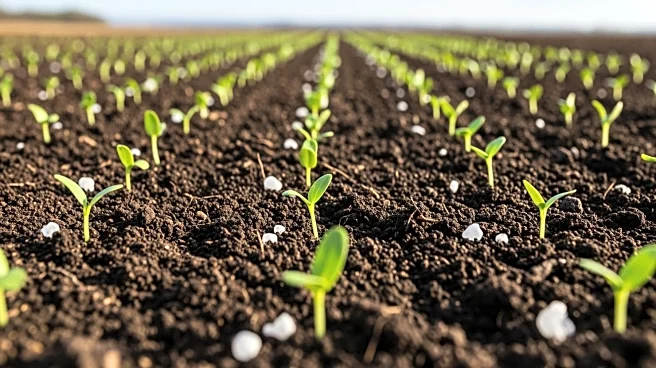
The Kwara government has initiated the distribution of fertiliser to farmers engaged in dry season farming, aiming to bolster agricultural productivity and ensure year-round farming. The initiative, led by the commissioner for agriculture and rural development,
Afees Alabi, seeks to alleviate the burden of rising agricultural input costs and maintain food availability. Farmers across the state are warned against selling or diverting the fertiliser, with legal consequences for violations. The distribution is part of the government's broader strategy to promote continuous farming and economic recovery through sustainable agricultural practices.
Why It's Important?
The fertiliser distribution is crucial for supporting farmers during the dry season, enhancing food security and stabilizing the agricultural sector in Kwara. By facilitating year-round farming, the initiative contributes to economic resilience and growth, positioning agriculture as a key pillar of the state's recovery efforts. The program reflects the government's commitment to rural development and improving farmers' livelihoods, which is essential for sustaining the local economy and addressing food scarcity challenges.
What's Next?
The Kwara government is expected to continue implementing agricultural interventions to support farmers and expand production capacity. Monitoring and enforcement measures will be crucial to ensure the effective use of distributed fertiliser. The initiative may lead to increased collaboration with agricultural organizations and stakeholders to further enhance farming practices and productivity. The success of the program could serve as a model for other regions seeking to strengthen their agricultural sectors.
Beyond the Headlines
The fertiliser distribution highlights the importance of government-led initiatives in supporting local agriculture and addressing food security challenges. It underscores the need for sustainable practices and policies that promote resilience in the face of economic and environmental challenges. The program's impact on rural development and community empowerment may have long-term benefits for the state's socio-economic landscape.