








What's Happening?
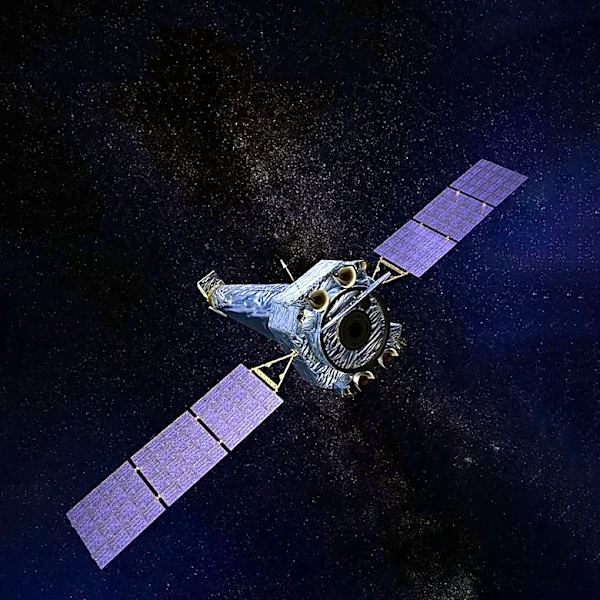
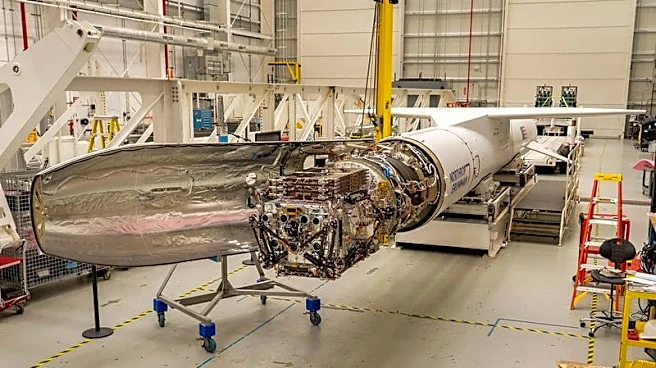
NASA has successfully established communication with Katalyst Space's robotic servicing spacecraft, LINK, which is tasked with elevating the orbit of the Neil Gehrels Swift Observatory. This marks LINK's first in-orbit operation following its launch and
separation from Northrop Grumman's Pegasus XL rocket. Over the coming weeks, Katalyst will conduct a series of checkout procedures for LINK, including evaluations of its propulsion, sensor, and navigation systems. Once these assessments are complete, LINK will approach the Swift Observatory, conduct a survey, and subsequently capture and elevate the 21-year-old observatory to a higher orbit over several months. NASA plans to provide ongoing updates about the mission on its Swift blog.
Why It's Important?
The mission to boost the Swift Observatory's orbit is significant for several reasons. Firstly, it extends the operational life of the observatory, which has been in service for over two decades. This is crucial for continuing its mission of observing gamma-ray bursts and other cosmic phenomena. The success of this mission also demonstrates the potential of robotic servicing spacecraft in maintaining and extending the life of existing space assets, which can be more cost-effective than launching new satellites. This could lead to more sustainable practices in space exploration and satellite management, benefiting scientific research and commercial satellite operations.
What's Next?
Following the successful communication and initial operations, the next steps involve detailed assessments of LINK's systems to ensure its readiness for the complex task of orbit adjustment. Once LINK completes its survey of the Swift Observatory, it will proceed with the capture and elevation process. This mission could set a precedent for future satellite servicing missions, potentially leading to more frequent use of robotic spacecraft for satellite maintenance. Stakeholders in the aerospace industry, including satellite operators and space agencies, will likely monitor the mission closely to evaluate the feasibility and benefits of such operations.