
What's Happening?
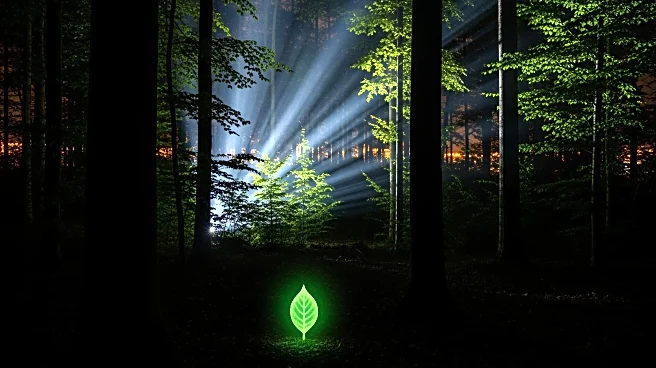
A recent study published in Nature Climate Change by Alice S. A. Johnston and colleagues from Cranfield University, UK, has highlighted the impact of artificial light at night (ALAN) on carbon fluxes across
North America and Europe. The research utilized nighttime light datasets and eddy covariance observations to assess how ALAN affects ecosystem-level respiration and net ecosystem exchange. The findings indicate that ALAN enhances respiration and weakens the net ecosystem exchange, thereby reducing the carbon sink capacity of ecosystems on a continental scale. This study adds to the growing body of evidence that light pollution is a significant factor in global change, affecting the carbon sequestration capabilities of ecosystems.
Why It's Important?
The study's findings are crucial as they reveal an often-overlooked factor in the assessment of carbon-climate feedbacks. With many of the world's carbon sinks already under threat from climate and land-use changes, the additional impact of ALAN could further compromise their ability to sequester carbon. This has significant implications for global efforts to mitigate climate change, as reduced carbon sink capacity could exacerbate the accumulation of greenhouse gases in the atmosphere. The study underscores the need for effective lighting strategies to mitigate the effects of light pollution, which could help preserve the carbon sequestration potential of ecosystems.
What's Next?
The study suggests that solutions to mitigate the impact of ALAN on ecosystems could be relatively straightforward. Developing lighting strategies that reduce lighting intensity and exploring the sensitivity of organisms to different wavelengths could form part of an actionable path forward. Future research is likely to focus on these areas to develop effective mitigation strategies. Policymakers and environmental organizations may need to consider these findings in their efforts to combat climate change and protect natural carbon sinks.