






What's Happening?
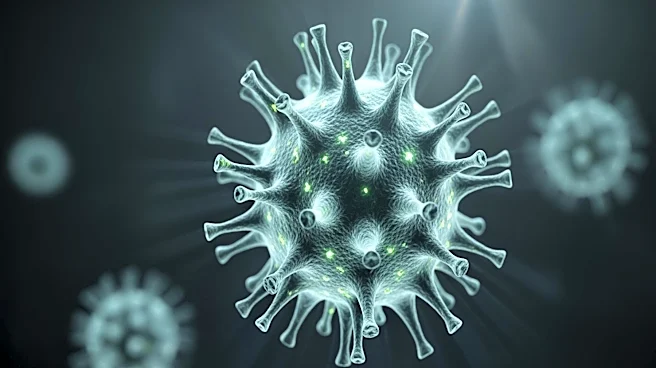
Health officials have identified a new COVID-19 variant, nicknamed 'Cicada', which has been mutating significantly since its arrival in the U.S. last summer. First detected in a traveler at San Francisco International Airport, the variant has been found
in at least 31 states and over 30 countries. Despite its mutations, which may allow it to evade existing immunity, the variant has not been associated with more severe illness. Experts, including Dr. Peter Chin-Hong from UCSF, warn that the variant could spread more rapidly during the summer months when people are more vulnerable immunologically. The variant's mutations, particularly in the spike protein, could reduce the effectiveness of current vaccines, although they are still expected to protect against severe disease.
Why It's Important?
The emergence of the 'Cicada' variant highlights the ongoing challenges in managing COVID-19, particularly as it may evade immunity from previous infections or vaccinations. This could lead to increased transmission rates, especially during the summer when social gatherings are more common. The potential for reduced vaccine effectiveness underscores the need for continuous monitoring and possible updates to vaccine formulations. Public health strategies may need to adapt to address the spread of this and other emerging variants, emphasizing the importance of vaccination and booster campaigns to mitigate severe outcomes.
What's Next?
Health officials are likely to continue monitoring the spread of the 'Cicada' variant through wastewater surveillance and other methods. There may be discussions about updating vaccines to better match circulating variants, similar to seasonal flu vaccines. Public health messaging will likely focus on encouraging vaccinations and boosters, particularly for vulnerable populations. Researchers will continue to study the variant's characteristics to understand its impact on immunity and vaccine efficacy.