

What's Happening?
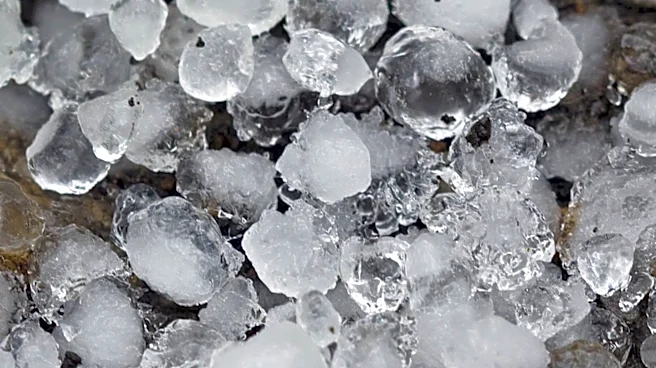
Illinois has certified a new state record for the largest hailstone, measuring over 6.6 inches across, which fell near Kankakee on March 10. The hailstone weighed one pound, 3.65 ounces, and had a volume of 38.697 cubic inches, shattering Illinois’ previous
record of 4.75 inches. The certification was announced by NOAA’s State Climate Extremes Commission on September 1, following detailed measurements by Dr. Victor Gensini of Northern Illinois University. Despite this new state record, South Dakota continues to hold the world record for the largest hailstone. This record-setting hailstone, which fell near Vivian in July 2010, measured 8 inches in diameter, had an 18.63-inch circumference, and weighed one pound, 15 ounces, even after some melting occurred.
Why It's Important?
The certification of a new state record in Illinois and South Dakota's continued hold on the world record highlight the extreme weather phenomena that can occur in the United States. These events underscore the increasing intensity of severe thunderstorms and the potential for significant property damage and agricultural losses caused by large hail. For meteorologists and climate scientists, these records provide valuable data for understanding storm dynamics, improving forecasting models, and assessing the impacts of climate change on severe weather patterns. For the public and insurance industries, such events serve as a reminder of the destructive power of nature and the importance of preparedness and resilient infrastructure in regions prone to severe weather. The detailed measurement and certification processes also emphasize the scientific rigor involved in documenting extreme weather events.
What's Next?
While the Illinois state record has been officially certified, the focus for meteorologists and climate scientists will continue to be on monitoring severe weather patterns and improving forecasting capabilities for extreme hail events. Researchers will likely analyze the conditions that led to the formation of such large hailstones in both Illinois and South Dakota to enhance understanding of supercell thunderstorms. For residents in hail-prone regions, awareness campaigns about severe weather preparedness, including securing property and seeking shelter, will remain crucial. The insurance industry will continue to assess risks and adjust policies based on the frequency and intensity of such events. Ongoing climate research will also aim to determine any long-term trends in the occurrence of extreme hail as part of broader climate change studies.
Beyond the Headlines
The occurrence of record-breaking hailstones in the U.S. prompts deeper reflection on the broader implications of climate change and atmospheric science. The formation of such massive ice projectiles requires specific atmospheric conditions, including strong updrafts and supercooled water droplets, which are characteristic of severe supercell thunderstorms. Scientists are actively investigating whether climate change is contributing to an increase in the frequency or intensity of these conditions, potentially leading to more frequent occurrences of extreme hail. Beyond the immediate damage, these events highlight the vulnerability of agricultural systems, infrastructure, and human safety to increasingly volatile weather. The meticulous process of measuring and certifying these records also underscores the importance of scientific data collection in understanding and adapting to a changing climate, informing everything from building codes to agricultural practices and disaster preparedness strategies.