







What's Happening?
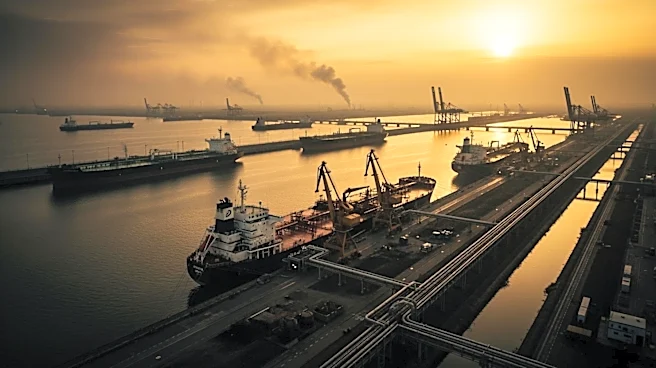
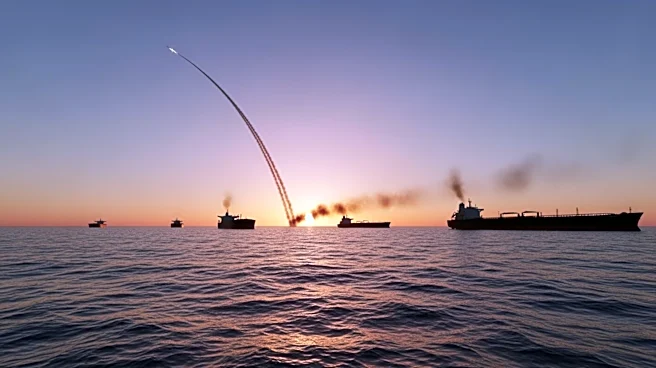
Ukraine's security forces have successfully targeted and damaged two shadow fleet tankers at the Black Sea port of Novorossiysk and three additional vessels at the Baltic port of Primorsk. These ports are significant oil export terminals for Russia. The attacks
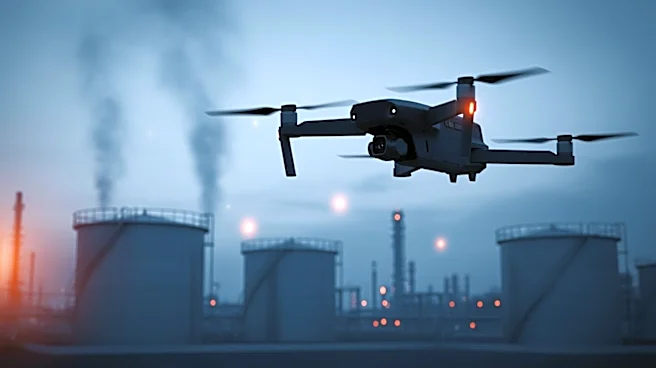
highlight Ukraine's ability to conduct long-distance strike operations, challenging Russian defenses. Ukrainian President Volodymyr Zelensky praised the operation, which involved the Security Service of Ukraine and the Ukrainian Navy. The strikes were executed using drones, targeting tankers in ballast to minimize environmental risks.
Why It's Important?
The strikes on Russian oil tankers represent a significant escalation in Ukraine's military capabilities and strategic operations. By targeting key Russian oil export terminals, Ukraine aims to disrupt Russia's energy revenue, which is crucial for funding its military operations. This development could lead to increased tensions between Ukraine and Russia, potentially affecting global oil markets and international diplomatic relations. The ability to strike at such distances also demonstrates Ukraine's growing military prowess, which may influence future negotiations and conflict dynamics.
What's Next?
The attacks may prompt Russia to bolster its defenses at key ports and reconsider its military strategy in the region. International reactions, particularly from countries dependent on Russian oil, will be critical in shaping the geopolitical landscape. The situation could lead to further military engagements or diplomatic efforts to de-escalate tensions. Monitoring the response from global powers, including the U.S. and European nations, will be essential in understanding the broader implications of these developments.