


What's Happening?
A study published in Nature has revealed that tumor cells within supratentorial ependymomas, a form of aggressive childhood brain cancer, form distinct cell populations with specific roles. Led by Mariella Filbin, MD, PhD, at the Dana Farber/Boston Children's
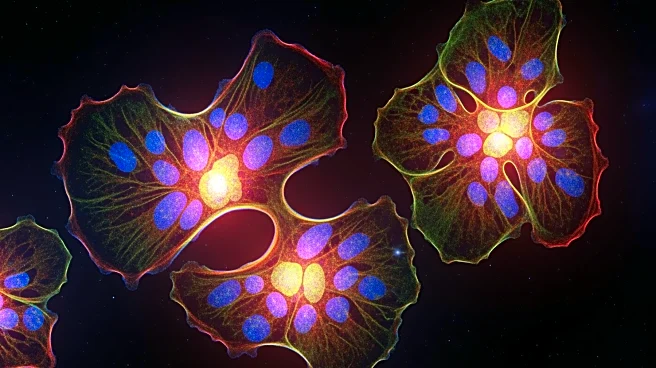
Cancer and Blood Disorders Center, the research utilized single-cell and spatial transcriptomics to map these cell types. The study found that these tumors consist of neuron-like and ependymal-like cancer cell states, organized into 'neighborhoods' influenced by factors such as low-oxygen areas. This discovery marks the first time different functions have been assigned to cancer cell types within a tumor, potentially paving the way for targeted therapies.
Why It's Important?
This research is significant as it provides a deeper understanding of the cellular dynamics within childhood brain tumors, which could lead to more effective treatments. By identifying the specific roles of different cancer cell types, therapies can be tailored to target these cells more precisely, potentially improving patient outcomes. The study also highlights the influence of the brain environment on tumor behavior, suggesting new avenues for intervention. This could be particularly impactful in treating supratentorial ependymomas, which often recur after standard treatments like surgery and radiation.
What's Next?
Future research will focus on whether specific cell groups identified in the study are responsible for tumor recurrence. The team plans to explore targeting these 'neighborhoods' or the interactions between tumor cells and normal brain cells. This could lead to the development of new therapeutic strategies that prevent tumor resurgence and improve long-term survival rates for affected children.