









What's Happening?
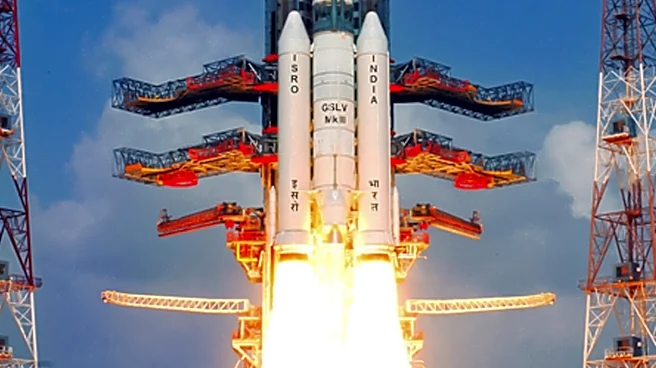
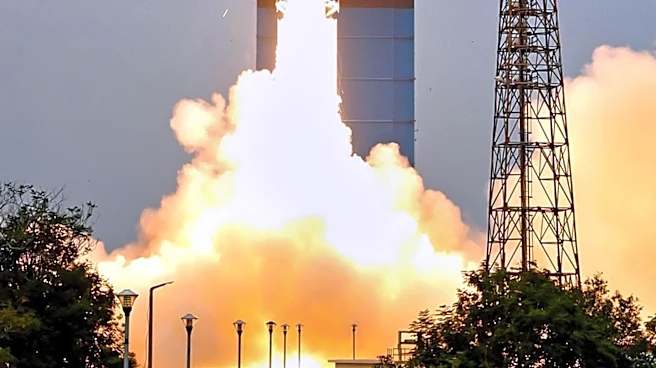
On July 18, India marked a significant milestone in its space journey with the successful launch of Vikram-1, the country's first privately developed orbital launch vehicle. This mission, named Mission Aagaman, signifies the entry of India's private sector
into the elite group of companies capable of placing satellites into orbit, a capability previously held only by U.S. and Chinese companies. Developed by Hyderabad-based Skyroot Aerospace, Vikram-1 is named after Dr. Vikram Sarabhai, the father of India's space program. This launch highlights the evolution of India's space ecosystem from being predominantly driven by the Indian Space Research Organisation (ISRO) to one where private innovation is taking center stage. The mission demonstrates the readiness of Indian private companies to complement and expand the legacy of ISRO.
Why It's Important?
The successful launch of Vikram-1 is a testament to the years of investment in private space technology in India. It reflects the impact of policy reforms that have opened the space sector to private participation, transforming the landscape. The creation of the Indian National Space Promotion and Authorisation Centre (IN-SPACe) as a regulatory and promotional body has been pivotal in this transformation. The Vikram-1 rocket, with its advanced carbon composite structures and modern propulsion systems, showcases the technological maturity achieved by Indian startups. This development positions India to become a major player in the global commercial launch market, leveraging its engineering talent, competitive costs, and ISRO's expertise. The success of Vikram-1 is expected to encourage greater private investment in the Indian space sector, potentially generating high-skilled employment and fostering growth similar to India's IT and telecom sectors post-liberalization.
What's Next?
The success of Mission Aagaman is likely to spur further private investment and innovation in India's space sector. Venture capital firms, manufacturing companies, and technology startups now have proof of India's capability to build globally competitive launch systems. This could lead to increased high-skilled employment opportunities across aerospace design, electronics, propulsion, and advanced manufacturing. As the demand for cost-effective, reliable launch services grows globally, Indian private launch providers are well-positioned to compete internationally. The collaboration between government and private industry is expected to expand India's presence in space, potentially making the country a global hub for commercial space launches.