






What's Happening?
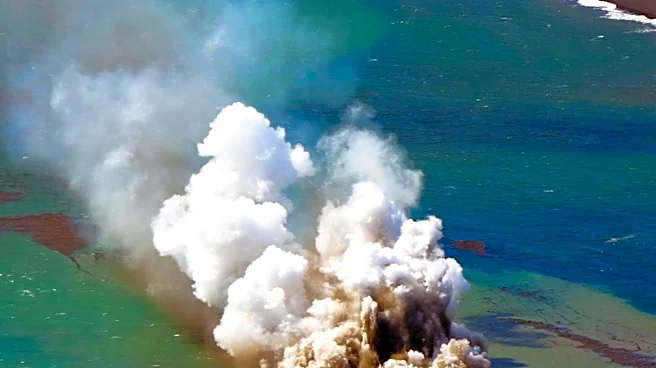
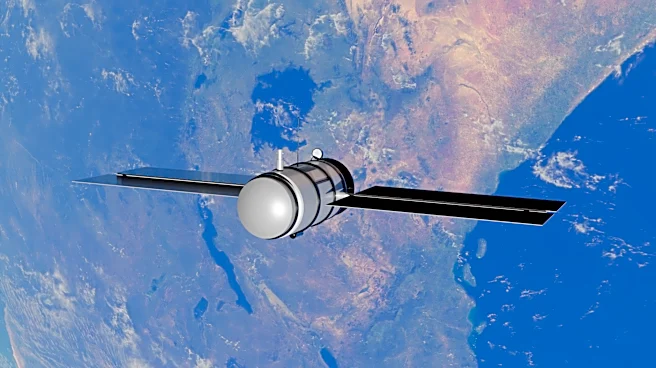
NASA satellites have detected the formation of a new island in the Bismarck Sea, north of Papua New Guinea, following a submarine volcanic eruption. The eruption, which began on May 8, 2026, has been monitored by various satellite platforms, capturing
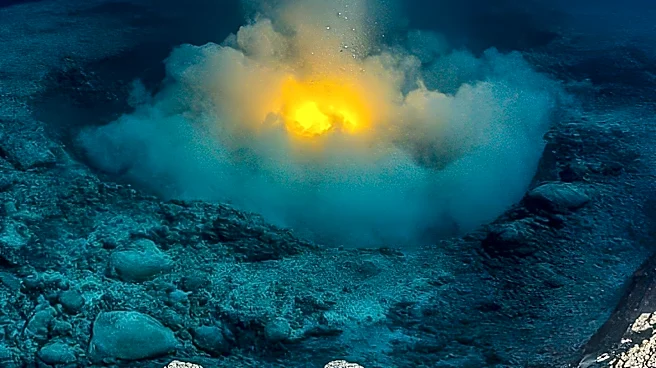
images of volcanic plumes and discolored water. The eruption site, located along Titan Ridge, has shown significant thermal anomalies, suggesting a shallow eruption vent. This geological event presents a rare opportunity for scientists to study the formation of new land and its ecological development.
Why It's Important?
The emergence of a new island provides a unique natural laboratory for scientists to study geological and ecological processes. This event allows researchers to observe the initial stages of island formation, including volcanic activity, land colonization by flora and fauna, and the impact of erosion. The data collected could enhance understanding of similar geological phenomena and contribute to broader scientific knowledge. Additionally, the event underscores the importance of satellite technology in monitoring and studying remote and inaccessible regions of the Earth.
What's Next?
Scientists will continue to monitor the eruption and the potential formation of a permanent island. If the island remains above water, it could serve as a site for long-term ecological and geological studies. Researchers plan to use radar data to map the new land and track its development over time. The ongoing observation will provide insights into the processes of island colonization and landscape evolution, offering valuable information for future scientific exploration and environmental management.