




What's Happening?
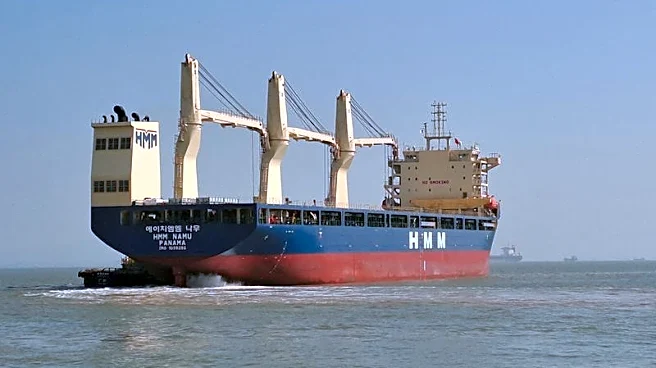
South Korea is evaluating a phased approach to contributing to the security of the Strait of Hormuz following discussions with U.S. Defense Secretary Pete Hegseth. South Korean Defense Minister Ahn Gyu-back indicated that potential support could include
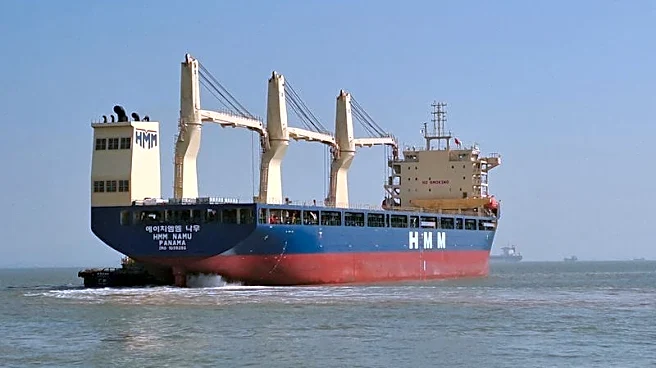
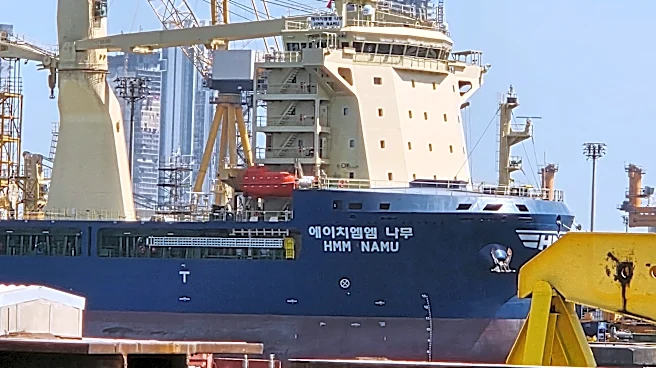
political backing, personnel dispatches, information sharing, and military asset provision. However, no detailed discussions have occurred regarding expanding South Korean military involvement. This development follows an attack on a South Korean-flagged vessel near the Strait of Hormuz, which South Korea condemned and is investigating. The meeting between South Korean and U.S. defense officials also covered other alliance issues, such as the transfer of wartime operational control from the U.S. to South Korea and plans for nuclear-powered submarines.
Why It's Important?
The potential involvement of South Korea in the Hormuz mission underscores the strategic importance of the Strait of Hormuz, a critical chokepoint for global oil shipments. South Korea's decision to support the mission, even in a non-military capacity, reflects its commitment to international security and alliance with the U.S. This move could enhance South Korea's role in global security matters and strengthen its defense ties with the U.S. Additionally, the discussions on wartime operational control and nuclear-powered submarines highlight ongoing efforts to bolster South Korea's military capabilities and autonomy, which could shift regional power dynamics and influence U.S.-South Korea relations.
What's Next?
South Korea will continue to assess its role in the Hormuz mission, with any decisions requiring adherence to domestic legal procedures. The investigation into the attack on the South Korean vessel will likely influence the country's response and future actions in the region. Furthermore, South Korea aims to complete the transfer of wartime operational control from the U.S. by 2030, contingent on meeting agreed military capability conditions. This transition could lead to increased South Korean military independence and a reevaluation of U.S. military presence in the region.