






What's Happening?
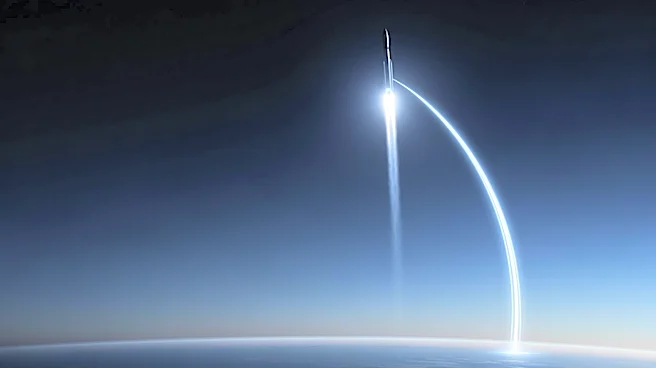
NASA has provided insights into why rockets, such as the Artemis II's Orion spacecraft, curve during their launch instead of maintaining a vertical trajectory. This maneuver, known as a gravity turn, is crucial for optimizing fuel efficiency and ensuring
the spacecraft reaches orbit. Initially, rockets launch vertically to overcome Earth's gravity, which requires significant thrust and fuel. However, maintaining a vertical path would deplete fuel reserves quickly, risking mission failure. By curving, rockets leverage Earth's gravity to increase acceleration, reducing fuel consumption and allowing the spacecraft to reach orbit more efficiently. This technique is essential for missions like Artemis II, which required additional maneuvers to travel to the moon and return safely.
Why It's Important?
The gravity turn maneuver is vital for the success of space missions, as it directly impacts fuel efficiency and mission viability. By optimizing fuel use, NASA can ensure that spacecraft have enough resources to complete their missions, whether reaching orbit or traveling to the moon. This technique also reduces the risk of catastrophic failure due to fuel depletion, enhancing the safety of crewed missions. The successful application of this maneuver in missions like Artemis II demonstrates NASA's ability to conduct complex space operations, paving the way for future explorations and technological advancements in space travel.
What's Next?
Future space missions will continue to rely on the gravity turn maneuver to optimize fuel efficiency and mission success. As NASA plans more ambitious missions, including potential manned missions to Mars, refining these techniques will be crucial. The success of Artemis II sets a precedent for future missions, highlighting the importance of efficient fuel management and trajectory planning. NASA's continued research and development in this area will likely lead to further innovations in space travel, potentially reducing costs and expanding the scope of human exploration beyond Earth's orbit.