
What's Happening?
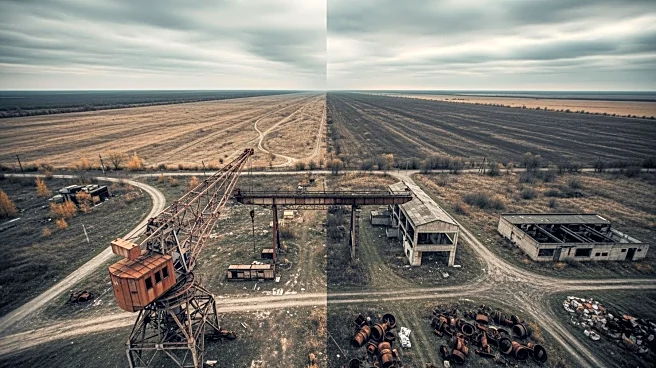
The ongoing conflict in Ukraine, initiated by Russia, has reached a stalemate in 2025, with minimal territorial changes. Russia has maintained and expanded its control in eastern Ukraine, particularly
in the Donbas region, despite significant costs in troops and equipment. The capture of Pokrovsk by Russian forces has been a major setback for Ukraine, as it diminishes the industrial resource base crucial for the war effort. This loss impacts Ukraine's ability to support its defense and postwar reconstruction efforts. Diplomatic efforts, including meetings between Russian President Vladimir Putin and President Trump, have not yielded significant progress towards a ceasefire, with Russia rejecting U.S. terms.
Why It's Important?
The prolonged conflict in Ukraine continues to strain both countries' resources and has broader implications for regional stability and international relations. The loss of industrial hubs like Pokrovsk weakens Ukraine's economic and military capabilities, potentially prolonging the conflict. The stalemate reflects the challenges of modern warfare, where technological advancements like drones have replaced traditional artillery, yet the outcome remains unchanged. The diplomatic stalemate highlights the complexities of international negotiations, with geopolitical strategies influencing the conflict's trajectory. The situation underscores the need for effective diplomatic interventions to prevent further escalation and humanitarian crises.
What's Next?
As the conflict enters another year, the prospects for a peaceful resolution remain uncertain. Continued military engagements and territorial disputes are likely, with both sides unwilling to compromise on key issues. The international community, particularly the U.S. and European allies, may need to reassess their strategies to facilitate meaningful negotiations. The ongoing conflict could lead to further economic sanctions and diplomatic isolation for Russia, while Ukraine may seek additional support from Western allies to bolster its defense capabilities. The humanitarian impact on civilians in the conflict zones remains a critical concern, necessitating increased international aid and support.