






What's Happening?
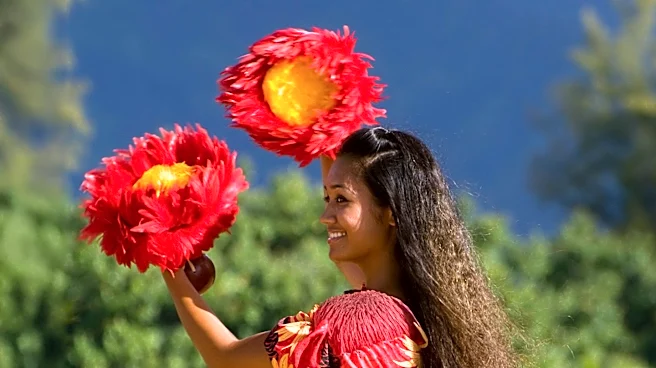
The University of Hawaii at Hilo is set to host a full-day celebration for Lā Kūʻokoʻa, commemorating Hawaiian Independence Day, on Saturday, November 14, 2026. The event, which will take place at Haleʻōlelo, College of Hawaiian Language, from 9:00 AM
to 3:00 PM, is free and open to the public. It aims to educate and celebrate the historical recognition of Hawaii as an independent nation by Great Britain and France through the Anglo-Franco Proclamation on November 28, 1843. The festivities will include educational activities, performances, live Hawaiian music, food trucks, and various vendors, inviting both the UH Hilo ʻohana and community members to participate in honoring this significant historical event.
Why It's Important?
This celebration of Lā Kūʻokoʻa at the University of Hawaii at Hilo is important for several reasons, particularly in the context of U.S. history and indigenous rights. It serves as a vital educational platform, reminding both local residents and the broader American public of Hawaii's past as an independent nation, a fact often overlooked in mainstream historical narratives. By highlighting the Anglo-Franco Proclamation of 1843, the event underscores the international recognition of Hawaiian sovereignty before its annexation by the United States. This commemoration helps to preserve Hawaiian cultural identity and historical memory, fostering a deeper understanding of the complex relationship between Hawaii and the U.S. It also provides an opportunity for cultural revitalization and community building, reinforcing the importance of indigenous perspectives within academic and public discourse.
What's Next?
Following the Lā Kūʻokoʻa celebration, the University of Hawaii at Hilo and other Hawaiian cultural organizations will likely continue their efforts to educate the public about Hawaiian history and sovereignty. These events often spark further interest in Hawaiian language, culture, and political history, potentially leading to increased enrollment in Hawaiian studies programs and greater community engagement in related advocacy. The ongoing recognition and celebration of Lā Kūʻokoʻa could also inspire similar initiatives in other educational institutions and communities, both within Hawaii and on the U.S. mainland, contributing to a more comprehensive understanding of American history that includes indigenous perspectives. The event's success may also encourage more robust support for Hawaiian cultural preservation efforts.
Beyond the Headlines
The Lā Kūʻokoʻa celebration delves into the deeper implications of historical memory and national identity within a multicultural society. It challenges the dominant narrative of U.S. expansion by foregrounding a period when Hawaii was a recognized sovereign state. This historical context raises questions about the nature of nationhood, self-determination, and the ongoing impact of colonial legacies. For the U.S., acknowledging and celebrating such events can contribute to a more nuanced understanding of its own history and its relationship with indigenous peoples. Ethically, it underscores the importance of historical accuracy and the right of communities to define and celebrate their own heritage, fostering a more inclusive national identity that respects diverse historical experiences.