
What's Happening?
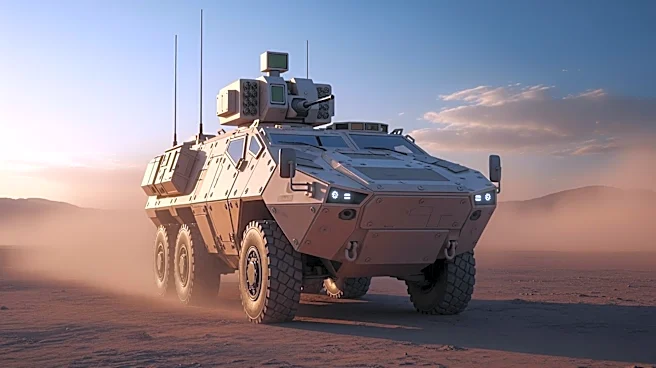
The Marine Corps has initiated a second prototyping phase for its Advanced Reconnaissance Vehicle (ARV) program, marking a significant step in replacing the aging Light Armored Vehicle (LAV) platform.
This phase involves a competitive process between General Dynamics Land Systems and Textron Systems, who are tasked with developing three pre-production ARV variants by 2028. These variants include a command and control model with drone capabilities, a version equipped with a 30mm autocannon, and a logistics model. The ARV program is part of the Marine Corps' broader Force Design restructuring, aimed at enhancing the service's amphibious capabilities and aligning more closely with the Navy for global operations. The program employs other transaction authorities to maintain agility and leverage competition, with Textron and General Dynamics both emphasizing the modular and maneuverable nature of their designs.
Why It's Important?
The ARV program is crucial for modernizing the Marine Corps' reconnaissance capabilities, which are essential for maintaining operational effectiveness in complex and contested environments. The transition from the LAV to the ARV reflects a strategic shift towards integrating advanced technologies, such as unmanned systems and enhanced communication capabilities, to improve situational awareness and precision targeting. This development is significant for the defense industry, as it involves substantial contracts and investment in new technologies. The competition between major defense contractors like Textron and General Dynamics underscores the high stakes involved, with billions of dollars and future military contracts on the line. The successful implementation of the ARV program could set a precedent for future military procurement and innovation strategies.
What's Next?
As the ARV program progresses, both Textron and General Dynamics will continue to refine their prototypes, with extensive testing scheduled for the coming years. The Marine Corps will evaluate these prototypes to determine which design best meets their operational requirements. The outcome of this competition will influence the future composition of the Marine Corps' reconnaissance battalions, potentially leading to the establishment of mobile reconnaissance battalions that integrate both manned and unmanned systems. The decision will also impact the broader defense industry, as it may dictate future trends in military vehicle design and procurement. Stakeholders, including military leaders and defense contractors, will closely monitor the program's developments and outcomes.