








What's Happening?
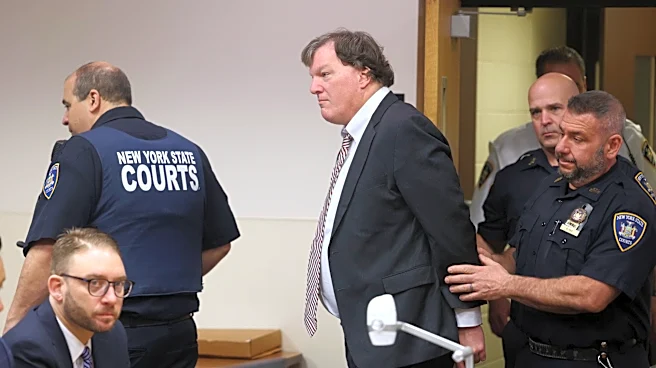
Rex Heuermann, the convicted Gilgo Beach serial killer, was sentenced to three life sentences in Suffolk County court. Heuermann, a Manhattan architect, pleaded guilty in April to the murders of eight women, which occurred between 1993 and 2010. During
the sentencing, he faced victim impact statements from the families of those he killed. The murders, which took place in a basement 'kill room' in his family home, involved heinous acts of strangulation and dismemberment. The case, which had remained unsolved for decades, was reopened in 2022, leading to Heuermann's arrest in 2023. The sentencing marks the end of a long-standing mystery that haunted the Long Island community.
Why It's Important?
The sentencing of Rex Heuermann brings closure to a case that has gripped the nation for years. It highlights the persistence of law enforcement in solving cold cases and the importance of justice for the victims' families. The case underscores the challenges in tracking serial offenders and the impact of technological advancements in forensic science, which played a crucial role in linking Heuermann to the crimes. The emotional impact on the victims' families and the community is profound, as they finally see justice served. This case also raises awareness about the vulnerabilities of marginalized groups, such as sex workers, who were targeted by Heuermann.
What's Next?
With Heuermann's sentencing, attention may shift to the broader implications for law enforcement practices in handling cold cases. The case could prompt reviews of unsolved cases nationwide, encouraging the use of modern forensic techniques. Additionally, there may be increased advocacy for the protection and rights of sex workers, who are often at risk of violence. The community's response and ongoing support for the victims' families will be crucial in the healing process. Law enforcement agencies may also focus on improving communication and collaboration to prevent similar cases in the future.