



What's Happening?
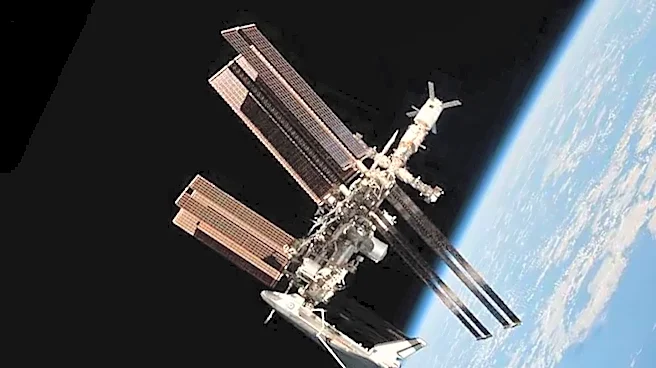
The Expedition 75 crew aboard the International Space Station (ISS) is engaged in a busy schedule, including preparations for an upcoming spacewalk, robotics operations, and various scientific duties. NASA astronaut Anil Menon and CSA (Canadian Space Agency)
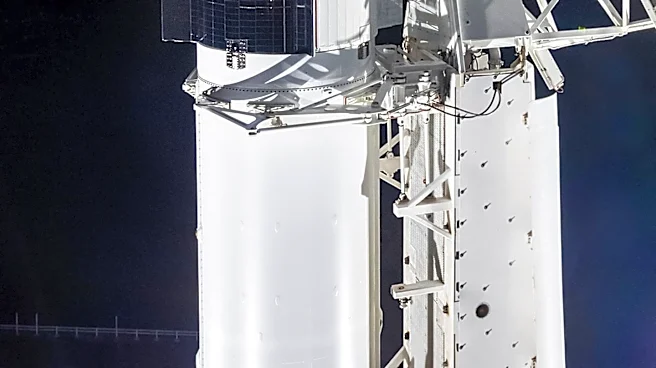
astronaut Joshua Kutryk are continuing their preparations for a spacewalk scheduled for Thursday, October 29, at 8 a.m. EDT, with NASA+ coverage beginning at 6:30 a.m. They have been organizing tools inside the Quest airlock and printing spacewalking procedures for their spacesuit cuffs. The spacewalk's objective is to install a roll-out solar array on the orbital outpost’s port side truss structure. NASA flight engineers Jessica Watkins and Luke Delaney will assist the spacewalkers and command the Canadarm2 robotic arm. Additionally, Watkins and Delaney packed a failed Canadarm2 wrist joint for return to Earth and configured scientific equipment, including a specialized camera for thunderstorm electrical activity and a camera for plant disease research in the Kibo laboratory module. Roscosmos flight engineer Sergey Teteryatnikov operated the European robotic arm for inspections, while Pyotr Dubrov and Anna Kikina installed Earth observation gear.
Why It's Important?
The activities on the ISS are crucial for maintaining and enhancing the station's operational capabilities and scientific output. The installation of new roll-out solar arrays is vital for increasing the station's power generation, which is essential for supporting more advanced scientific experiments and future expansion. Robotics operations, such as the inspection of the Rassvet module's docking port and the packing of failed components, ensure the station's structural integrity and facilitate the return of critical hardware for analysis on Earth. The diverse scientific duties, ranging from studying thunderstorm electrical activity to plant disease prevention in space, contribute to a broad spectrum of research. These experiments not only advance our understanding of fundamental science but also provide critical data for developing technologies and strategies for long-duration human spaceflight, benefiting future lunar and Mars missions. The international collaboration among NASA, CSA, and Roscosmos underscores the global effort in space exploration and scientific advancement.
What's Next?
The immediate next step is the spacewalk scheduled for Thursday, October 29, where Anil Menon and Joshua Kutryk will install the new roll-out solar array. Following the spacewalk, the crew will continue their routine maintenance, robotics tasks, and scientific experiments. The packed Canadarm2 wrist joint will be returned to Earth in November aboard a SpaceX Dragon cargo spacecraft for further analysis. The scientific data collected from the thunderstorm camera and plant disease research will be transmitted to Earth for analysis by researchers. The Earth observation gear installed by the Roscosmos cosmonauts will capture multi-wavelength imagery of various geographical regions, contributing to climate and environmental studies. The ongoing operations on the ISS will continue to provide valuable insights into living and working in microgravity, supporting the development of future space exploration technologies and human missions.
Beyond the Headlines
The continuous operations on the ISS, including spacewalks and scientific research, represent a testament to international cooperation in space and the enduring human drive for exploration. The installation of new solar arrays is part of a broader effort to modernize the station and extend its operational lifespan, maximizing its utility as a microgravity laboratory. The diverse scientific experiments conducted on board, from understanding plant growth in space to observing Earth's climate, have direct and indirect benefits for life on Earth, including advancements in agriculture, materials science, and environmental monitoring. The challenges of living and working in space, such as managing complex robotics and conducting spacewalks, push the boundaries of human ingenuity and technological development. The ISS serves as a critical stepping stone for future deep space missions, providing invaluable experience and data for humanity's journey to the Moon, Mars, and beyond.