




What's Happening?
ABC, along with its parent company Disney and eight ABC-owned stations, has filed a lawsuit against the Federal Communications Commission (FCC). The lawsuit challenges the FCC's demand for an early review of ABC's broadcast licenses, a move the network
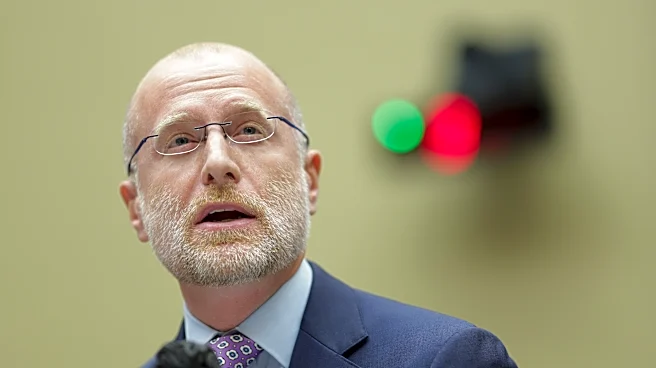
describes as an 'existential threat.' The FCC, under Chairman Brendan Carr, an ally of President Trump, ordered this early review in April, years before the licenses were set to expire. This action followed a joke made by ABC's late-night host Jimmy Kimmel, an outspoken critic of President Trump, which reportedly angered the President. ABC alleges that the Trump administration has repeatedly attacked its speech, including the stories reported by its journalists and the viewpoints aired on its programs, escalating into demands that ABC be stripped of its broadcast licenses. The network argues that it has no choice but to seek judicial redress for what it perceives as blatant retaliation for its First Amendment speech. The confrontation also involves the FCC's efforts to subject 'The View' to equal-time rules, despite ABC's assertion that it is a bona fide news program exempt from such regulations.
Why It's Important?
This lawsuit carries significant implications for media freedom and the regulatory landscape in the United States. ABC's claim of an 'existential threat' highlights concerns that government agencies might use their regulatory power to suppress critical reporting or dissenting viewpoints. If the FCC's actions are upheld, it could set a precedent allowing administrations to pressure media outlets by threatening their broadcast licenses, potentially chilling free speech and independent journalism. This case also brings into question the interpretation of 'public interest' obligations for broadcasters and the application of equal-time rules to news and talk programs. The outcome could influence how other media companies operate, potentially leading to self-censorship if they fear similar retaliatory actions. The broader message, as articulated by ABC, is that if the administration succeeds, it could compel media companies to report only favorably, undermining the role of a free press in a democratic society.
What's Next?
ABC has asked a federal court to halt the early renewal proceedings and to prevent the FCC from taking or threatening further action against the plaintiffs regarding their license applications. The FCC, in response, has reiterated that all broadcasters have a legal obligation to operate in the public interest and stated that it has been examining claims of Disney engaging in illegal DEI discrimination for over a year. The FCC plans to continue following the facts and law. This indicates a potentially drawn-out legal battle, with the courts determining the legality and constitutionality of the FCC's actions. The case could also prompt reactions from other media organizations, civil liberties groups, and political figures, potentially leading to broader discussions about media regulation, freedom of the press, and the balance of power between government and media. The resolution of this lawsuit will likely have lasting effects on the relationship between broadcasters and regulatory bodies.
Beyond the Headlines
The dispute between ABC and the FCC transcends a simple regulatory disagreement; it delves into fundamental questions about the role of media in a democracy and the boundaries of governmental power over speech. The accusation of 'blatant retaliation' for First Amendment speech suggests a weaponization of regulatory authority, which could erode public trust in both government institutions and the media. This situation also highlights the ongoing tension between the concept of broadcasters operating 'in the public interest' and the constitutional protection of free speech. The FCC's focus on diversity and inclusion practices as a reason for review, juxtaposed with the timing after critical commentary, raises ethical questions about the true motivations behind regulatory scrutiny. The outcome could redefine the scope of journalistic independence and the vulnerability of media outlets to political pressure, potentially leading to a more polarized media landscape or, conversely, a stronger defense of press freedoms.