




What's Happening?
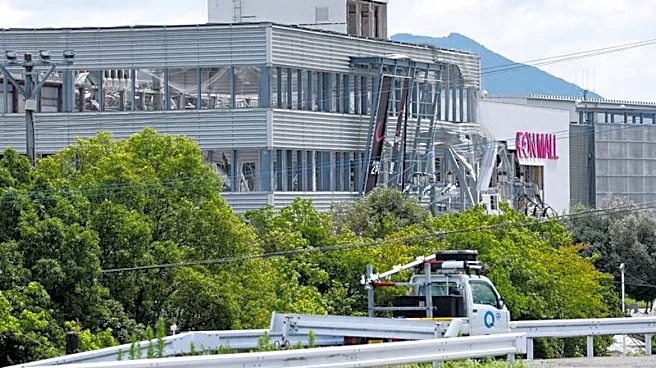
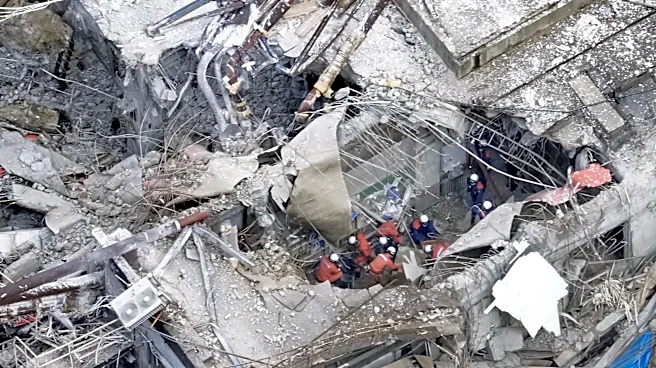
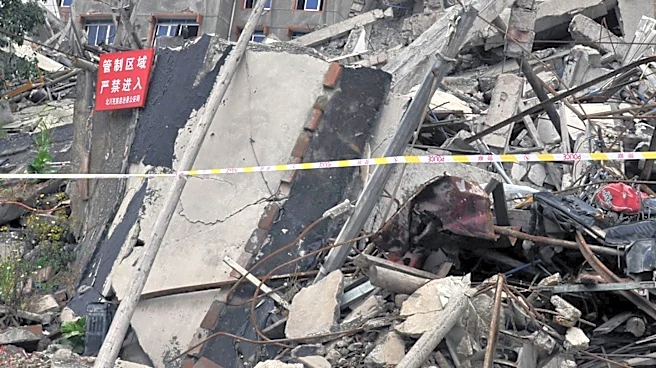
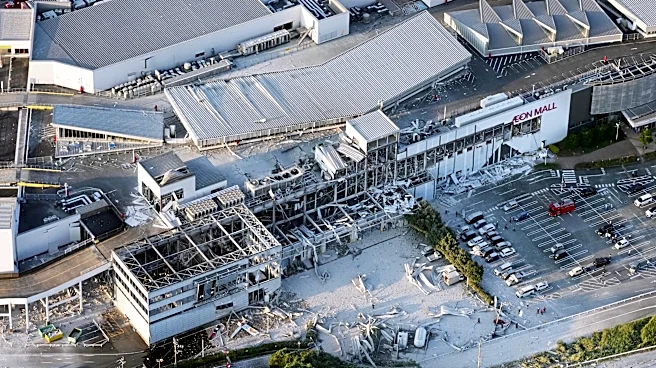
A magnitude 6.8 earthquake has struck Japan's Kyushu island, resulting in at least 13 deaths and leaving many missing. The earthquake caused significant structural damage, including the collapse of parts of the Aeon shopping mall. Rescue teams are working
tirelessly to locate survivors trapped beneath the rubble. Thousands have been displaced from their homes, and the situation remains dire as the search and rescue operations continue. The earthquake has prompted a national emergency response, with efforts focused on providing aid and support to affected communities.
Why It's Important?
The earthquake in Japan underscores the country's vulnerability to seismic activity and the importance of robust emergency response systems. The loss of life and displacement of thousands highlight the need for effective disaster preparedness and infrastructure resilience. This event may lead to increased scrutiny of building codes and safety standards in earthquake-prone areas. The economic impact could be significant, affecting local businesses and the broader economy. The disaster may also influence public policy and investment in disaster risk reduction strategies.
What's Next?
Rescue operations will continue as authorities prioritize finding survivors and providing aid to those affected. There may be an assessment of the structural damage and potential rebuilding efforts. The government could implement measures to enhance earthquake preparedness and infrastructure resilience. International aid and support might be sought to address immediate needs and long-term recovery efforts. Monitoring of seismic activity will be crucial to anticipate further risks and mitigate potential impacts.
Beyond the Headlines
The earthquake raises questions about Japan's preparedness for natural disasters and the effectiveness of its emergency response systems. It may lead to increased scrutiny of environmental policies and infrastructure planning in vulnerable regions. The social impact on displaced communities, including potential long-term relocation and economic recovery, will be significant. This event could influence global discussions on disaster risk reduction and resilience strategies, emphasizing the need for international cooperation in addressing seismic challenges.