
What's Happening?
Lebanon and Israel are engaging in rare direct talks in Washington to discuss extending a ceasefire with Hezbollah. The talks, facilitated by the U.S., aim to address ongoing hostilities and establish
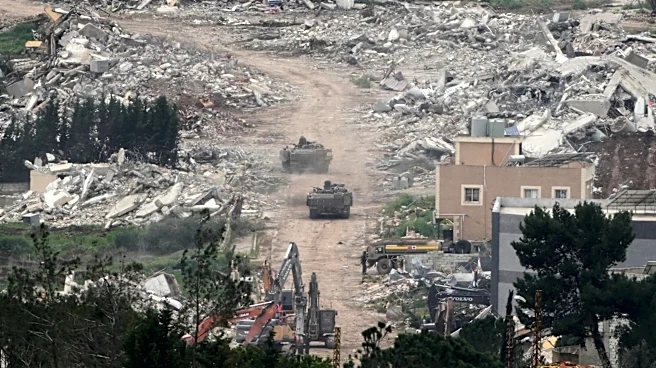
a framework for future negotiations. The ceasefire follows a recent conflict initiated by Hezbollah's rocket attacks on Israel, which led to Israeli military actions in southern Lebanon. Despite Hezbollah's rejection of the talks, the Lebanese government hopes to achieve a permanent end to the conflict. The discussions mark a significant step for two countries with no formal diplomatic relations, officially at war since 1948.
Why It's Important?
The direct talks between Lebanon and Israel represent a critical opportunity to address long-standing hostilities and potentially reduce Hezbollah's influence. A successful extension of the ceasefire could lead to a more stable border region and reduce the risk of further escalation. The talks also highlight the complex geopolitical dynamics involving Iran, which supports Hezbollah. A resolution could weaken Iran's influence in Lebanon and the broader region. However, the success of these talks depends on overcoming significant challenges, including Hezbollah's military capabilities and its opposition to the negotiations.
What's Next?
The outcome of the talks will depend on the ability of both countries to agree on terms that address security concerns and reduce Hezbollah's military threat. The U.S. and other international actors may play a crucial role in facilitating these discussions and ensuring compliance with any agreements reached. The Lebanese government is also considering documenting alleged war crimes by Israel, which could impact future negotiations. The continuation of diplomatic efforts will be essential to achieving a lasting peace and addressing the underlying issues that fuel the conflict.