



What's Happening?
The U.S. Navy is reevaluating its approach to weapons acquisition and construction in light of lessons learned from the ongoing Ukraine war. According to U.S. Navy Secretary John Phelan, the conflict has exposed significant challenges in the current procurement
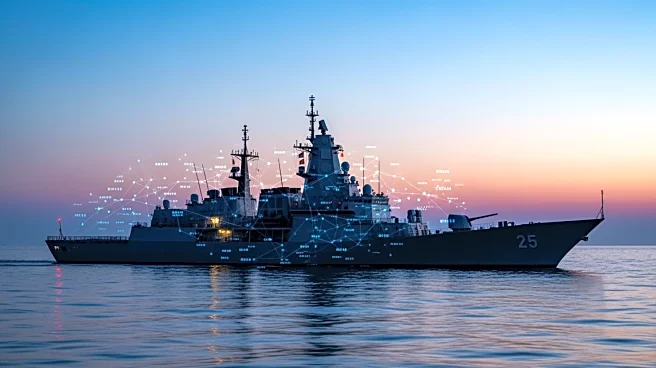
processes, highlighting the rapid obsolescence of weapons systems. During his keynote speech at the WEST 2026 conference in San Diego, Phelan emphasized the need for faster adaptation and innovation, drawing parallels to Ukraine's success in contesting Russian naval forces despite lacking a traditional navy. The U.S. Navy plans to integrate unmanned systems, artificial intelligence, and electronic warfare into its fleet, forming the core of the new 'Golden Fleet' construct. This shift aims to enhance the Navy's ability to rapidly prototype, test, and scale innovations in real-time, ensuring that the U.S. maintains a competitive edge in modern warfare.
Why It's Important?
The strategic shift in the U.S. Navy's acquisition process is significant as it addresses the need for agility and innovation in military operations. By focusing on unmanned systems and rapid prototyping, the Navy aims to overcome the limitations of traditional procurement methods, which have been criticized for their slow pace and inability to keep up with technological advancements. This change is crucial for maintaining national security and ensuring that the U.S. military can effectively respond to emerging threats. The integration of advanced technologies like artificial intelligence and electronic warfare could provide the U.S. with a strategic advantage, potentially deterring adversaries and protecting national interests. The move also reflects a broader trend in military strategy, where adaptability and speed are becoming increasingly important in the face of evolving global conflicts.
What's Next?
The U.S. Navy's focus on unmanned systems and rapid innovation is expected to lead to significant changes in its fleet composition and operational strategies. As the Navy implements the 'Golden Fleet' construct, it will likely increase investments in research and development of unmanned platforms and related technologies. This could involve collaborations with defense contractors and technology firms to accelerate the development and deployment of new systems. Additionally, the Navy may need to address potential challenges related to integrating these technologies into existing infrastructure and training personnel to operate and maintain them. The success of this strategic shift will depend on the Navy's ability to effectively manage these transitions and ensure that new capabilities are seamlessly integrated into its operations.