






What's Happening?
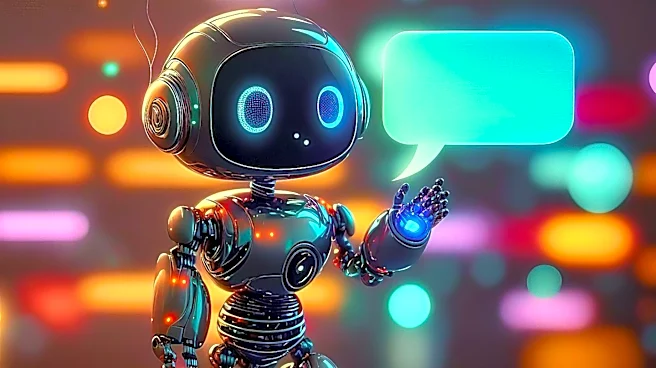
Interactions with artificial intelligence (AI) chatbots are influencing how people treat each other, according to recent studies. Sociologists Ashley Harrell and Margaret Traeger conducted experiments with over 4,000 participants, revealing that individuals
who initially interacted with a bot were less cooperative and empathetic towards subsequent human partners compared to those who started with a human. This suggests that the instrumental and demanding communication style often adopted with chatbots can spill over into human interactions. The studies found that people tend to be less courteous, more direct, and even more aggressive when communicating with bots. This behavior, driven by the immediate and transactional nature of chatbot interactions, is becoming habitual. The researchers highlight that while bots may not have consciousness, the way humans treat them can shape their own social reflexes and potentially diminish empathy in real-world relationships.
Why It's Important?
The findings suggest a concerning trend where the increasing reliance on AI chatbots could inadvertently erode human empathy and civility. If people habitually adopt a brusque and instrumental communication style with AI, this behavior may transfer to their interactions with other humans, impacting social norms and interpersonal relationships. This has significant implications for society, potentially leading to a less cooperative and more demanding social environment. The studies challenge the notion that how we treat bots is inconsequential because they lack feelings; instead, they argue that the impact is on the human user, shaping their character and interaction patterns. This raises critical questions for chatbot designers and policymakers about the ethical design of AI systems to promote positive human behaviors rather than inadvertently fostering negative ones.
What's Next?
The research indicates a need for a different approach to thinking about human-AI interaction. Ethicists like Tae Wan Kim suggest drawing on concepts like the Confucian 'li,' which emphasizes how everyday interactions shape individuals into more civil and respectful agents. This perspective implies that chatbot design could be intentionally crafted to rehearse patience, warmth, and civility, rather than just efficiency. Future developments in AI could focus on creating chatbots that respond to abuse with empathy or gently redirect hostility, potentially influencing users to adopt more positive communication styles. The ongoing integration of chatbots into daily life necessitates a conscious effort from both developers and users to consider the long-term impact on human social behavior. Education on responsible AI interaction and the potential for spillover effects into human relationships will be crucial.
Beyond the Headlines
The phenomenon of AI influencing human social behavior delves into the deeper psychological and philosophical aspects of human-technology interaction. The 'media equation' suggests that humans apply social reflexes to computers automatically, even when aware of their artificial nature. This highlights the powerful, often unconscious, ways technology shapes human psychology. The concern extends beyond individual interactions to the broader 'interaction order' of society, the unwritten rules governing human behavior. If instrumental and dismissive communication with AI becomes normalized, it could subtly alter these societal norms, affecting how much patience and warmth people bring to challenging human exchanges. This raises questions about the kind of society we are building as AI becomes more pervasive, and whether technological convenience might come at the cost of essential human qualities like empathy and civility. The design choices made today in AI development could have profound, long-term cultural implications.