






What's Happening?
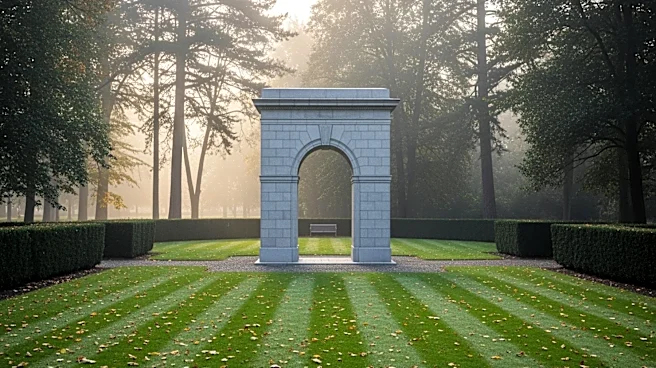
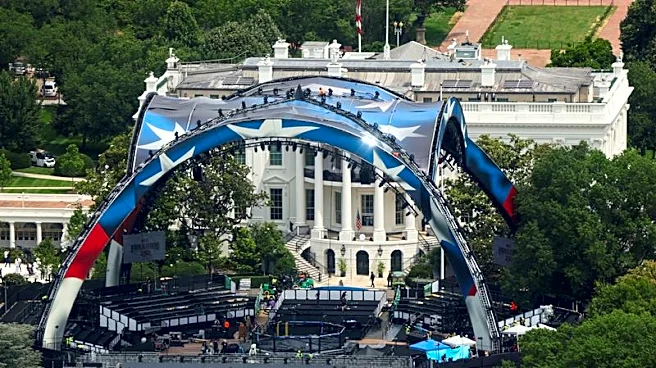
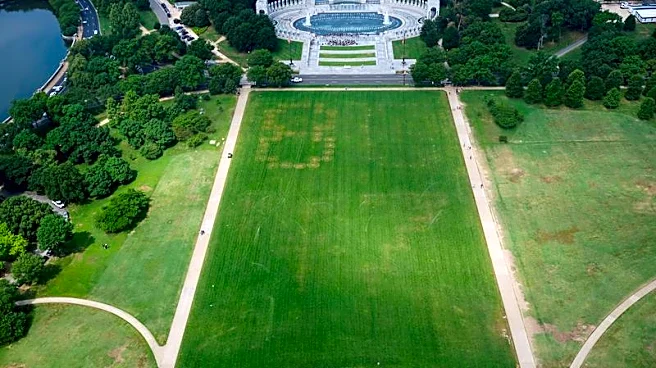
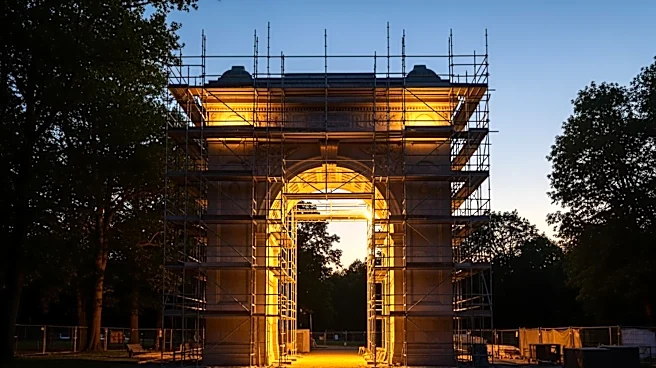
The National Park Service has released a preliminary assessment detailing plans for the construction of a 250-foot-high triumphal arch near the Lincoln Memorial, a project championed by President Trump. The construction is set to occur 20 hours per day,
year-round, with the aim of completing the project within three years. The arch, which would be more than twice as high as the Lincoln Memorial, requires extensive equipment including tower cranes and concrete pump systems. The National Capital Planning Commission has requested more information from the Interior Department regarding the project's impact on air travel and other logistical concerns. Preliminary surveys and testing have already begun, and the U.S. Commission of Fine Arts has approved the design. However, the project faces criticism and legal challenges due to its potential impact on the skyline and historical views.
Why It's Important?
The construction of the triumphal arch is significant as it represents President Trump's efforts to leave a lasting mark on Washington, D.C. The project has sparked debate over its impact on the city's historical landscape and air travel safety, given its proximity to Ronald Reagan Washington National Airport. The Federal Aviation Administration is reviewing the project's height to ensure it does not pose a risk to airplane travel. The arch's construction also raises questions about the use of taxpayer funds and private donations, as well as the administration's transparency in advancing such projects. Critics argue that the arch could disrupt the visual harmony between the Lincoln Memorial and Arlington National Cemetery, highlighting the tension between development and preservation of historical sites.
What's Next?
The National Capital Planning Commission's request for more information keeps the project alive, as officials continue to study its potential impacts. The Federal Aviation Administration will conduct a full aeronautical study in coordination with the National Park Service to address safety concerns. Legal challenges against the project are ongoing, with a group of veterans and a historian suing the Trump administration to block the construction. The outcome of these legal proceedings and further assessments will determine the project's future. Additionally, the administration's approach to funding and transparency will likely face continued scrutiny from lawmakers and the public.