






What's Happening?
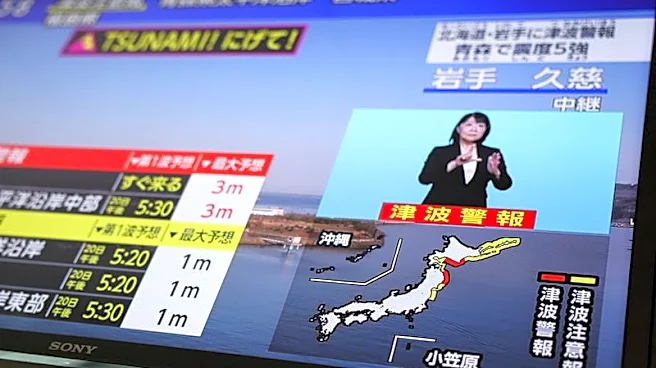
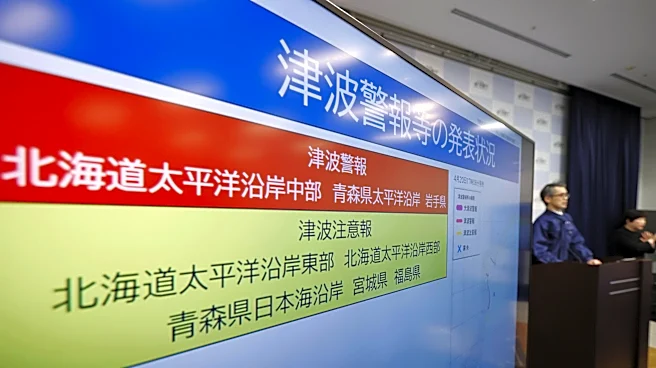
Japan experienced a powerful 7.7-magnitude earthquake off its northeastern coast, prompting tsunami warnings and advisories. The tremor struck near Sanriku, about 330 miles from Tokyo, at a depth of 20 kilometers. The Japanese Meteorological Agency issued
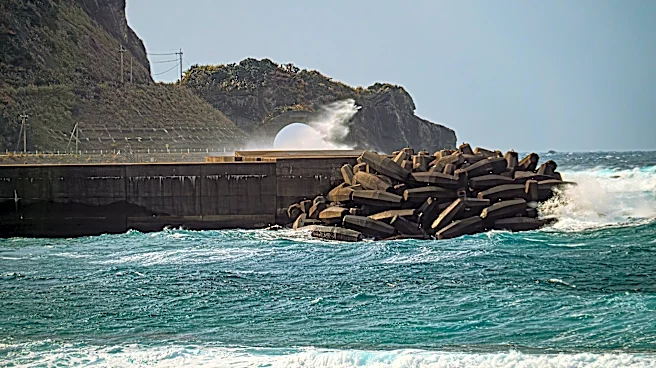
tsunami warnings, expecting waves between one and three meters. Although the warnings were later downgraded, over 170,000 people were advised to evacuate. The earthquake caused minor injuries and power outages, but no major damage or fatalities were reported. The government has set up an emergency taskforce and urged citizens to remain vigilant, as the risk of a larger earthquake remains elevated.
Why It's Important?
Japan's location on the Pacific Ring of Fire makes it highly susceptible to seismic activity, with significant implications for public safety and infrastructure. The recent earthquake serves as a reminder of the ongoing threat of natural disasters in the region. The government's swift response and the public's adherence to evacuation orders highlight the importance of preparedness in minimizing casualties and damage. The event also underscores the need for continuous monitoring and improvement of disaster response strategies to protect lives and property.
What's Next?
Authorities have warned that the risk of another, potentially more powerful earthquake remains high for the coming week. The government is advising residents to stay prepared and have emergency supplies ready. The Japan Meteorological Agency continues to monitor seismic activity closely, and further advisories may be issued if necessary. The incident may prompt a review of current disaster preparedness measures and infrastructure resilience, potentially leading to policy changes or increased investment in safety measures.