





What's Happening?
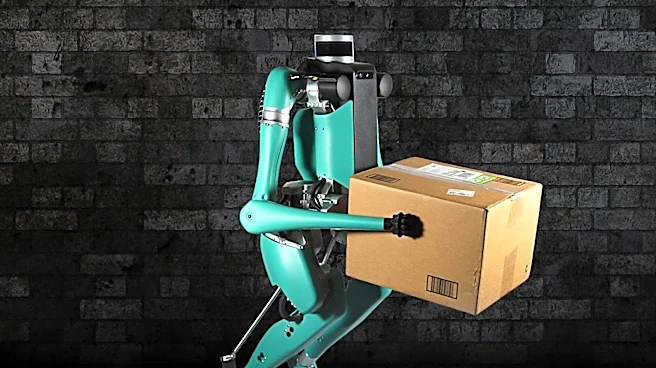
Several delivery robots operated by the company Coco caused a temporary blockage on a Chicago sidewalk earlier this week. A video captured by Becca Ostien showed multiple robots clustered together, obstructing pedestrian movement. Coco issued a statement
acknowledging the incident, attributing it to a 'sidewalk deployment error' that caused several robots to reroute simultaneously from their station. The company stated that this behavior is not typical for their robots and that their team quickly identified and corrected the issue, clearing the sidewalk within minutes. Coco has since resolved the routing problem and implemented safeguards to prevent similar occurrences. This incident is not the first malfunction involving food delivery robots in Chicago; earlier this year, one Coco robot and one SERVE robotics robot crashed into bus shelters.
Why It's Important?
The incident highlights the ongoing challenges and growing pains associated with integrating autonomous delivery robots into urban environments. While these robots offer potential benefits in efficiency and convenience, their malfunction can lead to public inconvenience and safety concerns. The temporary blockage in Chicago underscores the need for robust operational protocols and advanced navigation systems to ensure seamless coexistence with pedestrians and urban infrastructure. Repeated incidents, such as previous crashes into bus shelters, could erode public trust and potentially lead to increased scrutiny or stricter regulations from city authorities regarding the deployment and operation of such technologies. For companies like Coco, maintaining a positive public image and demonstrating reliability are crucial for their business model and expansion plans in densely populated areas.
What's Next?
Coco has stated that it has already implemented safeguards to prevent a recurrence of the sidewalk congestion issue. Moving forward, the company will likely focus on reinforcing these new protocols and potentially enhancing its robot navigation and deployment systems to avoid future malfunctions. City officials in Chicago may continue to monitor the performance of delivery robot fleets, and repeated incidents could prompt discussions about updated regulations or operational guidelines for autonomous delivery services. Other companies operating similar robot fleets will likely review their own systems and protocols to prevent similar public disruptions, aiming to maintain smooth operations and public acceptance as the use of delivery robots expands.
Beyond the Headlines
The incident with Coco's delivery robots touches upon broader societal implications regarding the increasing automation of urban services. As more autonomous vehicles and robots are introduced into public spaces, questions arise about liability, urban planning, and the evolving relationship between humans and technology. While the immediate issue was a temporary sidewalk blockage, such events contribute to the ongoing public discourse about the benefits versus the potential drawbacks of widespread automation. Long-term, these incidents could influence urban design, leading to dedicated pathways or infrastructure for autonomous delivery systems, or they could spark debates about the extent to which public spaces should be shared with robotic entities. The balance between technological advancement and maintaining pedestrian-friendly, safe urban environments will be a continuous point of discussion.