


What's Happening?
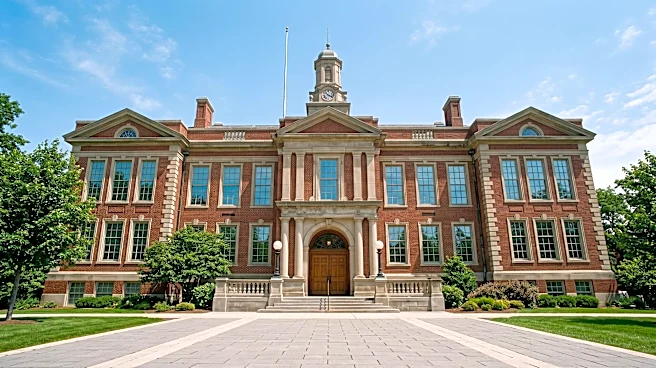
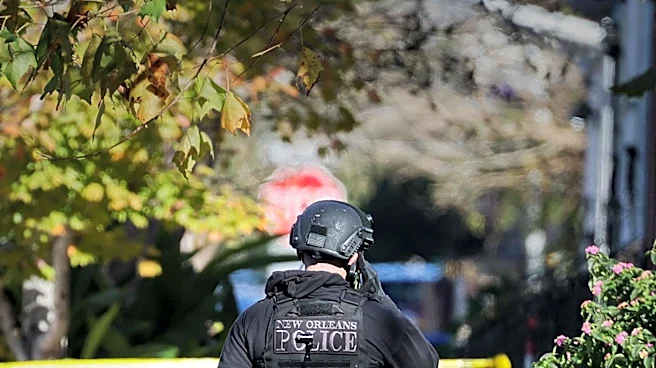
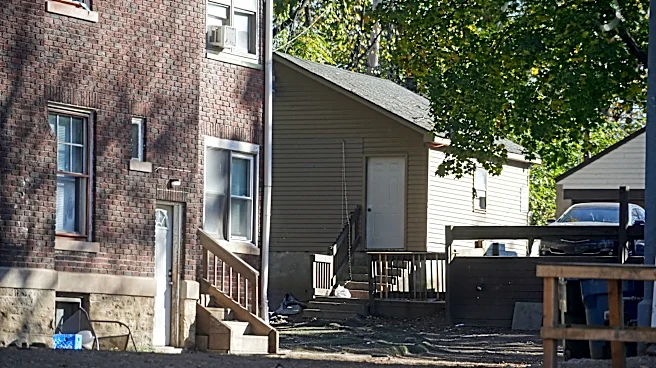
Brevard Middle School was placed on lockdown after a 911 call reported a shooting in a nearby home on Montview Circle. The call, received around 2:06 p.m. on Thursday, claimed a shooting was underway with the suspect still inside the residence. This prompted
a multi-agency response involving Brevard officers, the Transylvania County Sheriff's Office, the North Carolina State Bureau of Investigation, and the North Carolina State Highway Patrol. As officers secured the area, the school initiated a precautionary lockdown. After checking the school and surrounding homes, authorities found no evidence of a shooting, no victims, and no suspects. Police believe the incident was a 'swatting' call, a false emergency report designed to elicit a large law enforcement response. The homeowners were not present at the time of the call. The investigation into who made the call and why remains active.
Why It's Important?
This incident highlights the growing problem of swatting, which diverts critical emergency resources from genuine emergencies and creates unnecessary panic and disruption, particularly in educational settings. The lockdown of Brevard Middle School caused significant distress for students, staff, and parents, underscoring the psychological impact of such hoaxes. The multi-agency response demonstrates the substantial resources expended on these false alarms, which can strain public safety budgets and delay responses to actual crises. The increasing sophistication of swatting calls, potentially involving AI-generated voices, poses a new challenge for dispatchers, making it harder to distinguish hoaxes from real threats and emphasizing the need for enhanced training and technology to combat this trend.
What's Next?
The investigation into the Brevard Middle School swatting incident is ongoing, with authorities working to identify the caller. There is no immediate indication that AI was involved in this specific call, but the broader trend of AI-generated hoaxes is a concern for dispatchers nationwide. Public safety communication professionals are actively developing training criteria to help dispatchers identify AI-generated fake calls. The outcome of this investigation could lead to criminal charges for those responsible for the swatting call, serving as a deterrent for future incidents. Schools and law enforcement agencies may also review and update their lockdown and emergency response protocols in light of such events.
Beyond the Headlines
The rise of swatting incidents, particularly those targeting schools, reflects a disturbing trend of weaponizing emergency services. This phenomenon not only endangers first responders and the public but also erodes trust in emergency systems. The potential use of artificial intelligence to create more convincing hoax calls adds a new layer of complexity, pushing the boundaries of digital deception. This development necessitates a proactive approach from technology companies, law enforcement, and policymakers to develop countermeasures and legal frameworks to address this evolving threat. The psychological toll on communities, especially children, who experience these traumatic false alarms, also warrants greater attention and support.