




What's Happening?
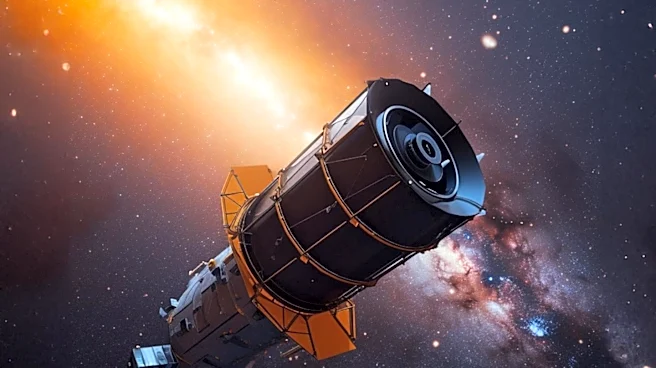
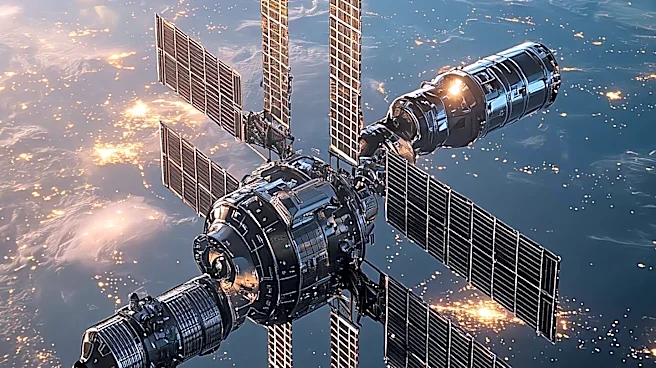
Astronomers report that proposed orbital data centers, designed to house large language models and AI operations, could profoundly transform the night sky. Companies like SpaceX, Blue Origin, and Cowboy Space Corporation have filed proposals with the U.S.
Federal Communications Commission (FCC) for constellations ranging from 20,000 to one million satellites. A study posted on arXiv.org by astronomer Aaron Boley and his colleagues modeled the optical brightness of these proposed configurations. The findings indicate that sunlight reflecting off the satellites' large solar arrays would create an inescapable fixture of lights at dawn and dusk, visible even from remote 'dark sky' locations. In the most extreme scenario, these satellites could outnumber visible stars by a factor of 100, significantly impacting astronomical observations and potentially disrupting ecosystems that rely on dark skies.
Why It's Important?
The proliferation of orbital data centers poses significant challenges for scientific research, particularly astronomy. The increased light pollution from these megaconstellations could obscure fainter celestial objects, interfere with infrared observations due to heat emissions, and disrupt radio astronomy through communication signals. This could severely hinder the ability of observatories, especially those in pristine locations like Antarctica, to study phenomena such as the cosmic microwave background. Beyond scientific implications, the altered night sky could have environmental consequences, affecting animals that depend on natural light cues for navigation, hunting, and reproduction. This development highlights a growing tension between technological advancement and environmental preservation, raising questions about the long-term impact of space commercialization on Earth's natural environment and scientific endeavors.
What's Next?
The future of orbital data centers will likely involve ongoing discussions between satellite operators, astronomers, and regulatory bodies like the FCC. While some companies, such as SpaceX, have committed to mitigation strategies to reduce satellite brightness, others have not publicly announced similar plans. Public pressure is expected to continue playing a role in encouraging companies to invest in brightness reduction technologies. The FCC's current stance is that light pollution from satellites is largely outside its control, suggesting that a more comprehensive regulatory framework might be needed. Further research and collaboration will be crucial to develop solutions that allow for technological progress while minimizing adverse impacts on scientific observation and the environment. The debate will continue on how to balance the demand for advanced computing infrastructure with the preservation of the night sky.
Beyond the Headlines
The issue of orbital data centers extends beyond mere light pollution, touching upon fundamental questions about humanity's relationship with space and the environment. The drive to move data centers into orbit, partly to alleviate terrestrial resource strain and 'not in my backyard' concerns, may simply shift environmental burdens rather than resolve them. This raises ethical considerations about who bears the cost of technological progress and whether the benefits outweigh the potential irreversible changes to a shared global resource—the night sky. The situation underscores the need for international cooperation and foresight in regulating space activities to prevent a 'tragedy of the commons' in Earth's orbit. It also prompts a broader societal discussion about the value of an unpolluted night sky, not just for scientific research, but for cultural heritage, human well-being, and the intrinsic value of nature.