






What's Happening?
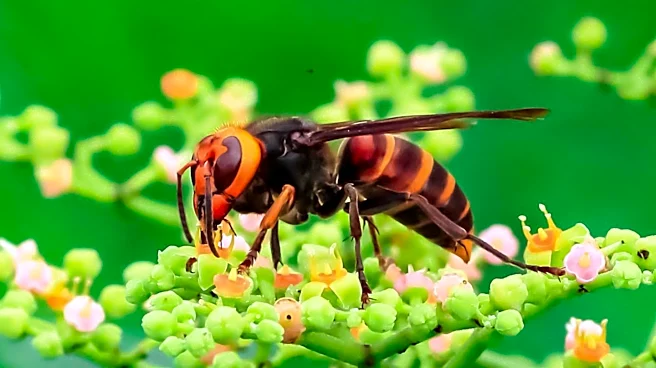
Invasive yellow-legged hornets have been detected for the first time near Matthews, North Carolina. A local homeowner reported unusual hornet activity at a hummingbird feeder, prompting the North Carolina Department of Agriculture and Consumer Services
to take action. These hornets, known for preying on honeybees and other pollinators, pose a significant threat to local ecosystems. As an invasive species, their population could grow rapidly without intervention. The species was first identified in the Southeast near Savannah, Georgia, in 2023, and has since been a concern for South Carolina, which has been actively working to control its spread. In response to the recent sighting, approximately 200 traps have been set up around Matthews and Union County to capture and monitor the hornets.
Why It's Important?
The presence of yellow-legged hornets in North Carolina is significant due to their potential impact on local agriculture and ecosystems. Honeybees, which are vital for pollination and agriculture, are particularly at risk. The hornets' ability to rapidly increase in number could lead to a decline in bee populations, affecting crop yields and biodiversity. This situation underscores the importance of early detection and rapid response to invasive species to prevent ecological and economic damage. The efforts by state officials to monitor and control the hornet population are crucial in safeguarding the region's agricultural interests and maintaining ecological balance.
What's Next?
State officials are likely to continue monitoring the situation closely, with potential adjustments to their strategy based on the effectiveness of the current trapping efforts. Beekeepers and residents in the area have been advised to report any sightings of the hornets or their nests, which are characterized by a muddy red color and larger size compared to other hornet nests. Public awareness and cooperation will be essential in managing the spread of this invasive species. Further actions may include increased public education campaigns and collaboration with neighboring states to develop a comprehensive regional response.