


What's Happening?
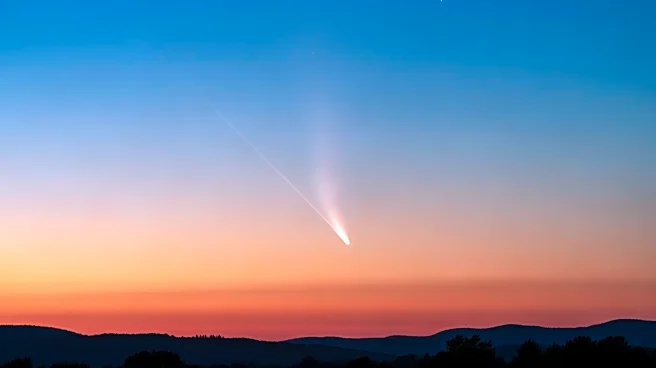
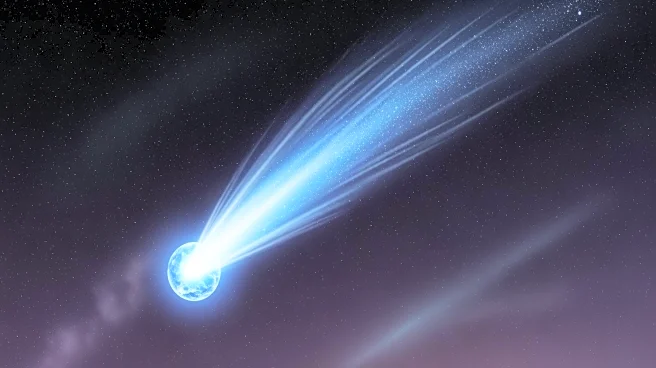
Comet C/2024 E1, also known as Wierzchos, is set to make its closest approach to Earth on February 17, 2026. This event, known as perigee, will see the comet pass approximately 94 million miles from Earth, a distance similar to that between Earth and
the sun. The comet's recent proximity to the sun on January 20, 2026, caused a peak in brightness as solar heat vaporized its frozen materials, enhancing its visibility. Currently, the comet has a brightness magnitude of +8.2, which is beyond the naked eye's visibility but can be observed with telescopes or binoculars. However, its position in the southern constellation of Grus means it will be low on the southwestern horizon at sunset for U.S. viewers, making it a challenging target.
Why It's Important?
The approach of Comet Wierzchos provides a rare opportunity for astronomers and stargazers to observe a celestial event that highlights the dynamic nature of our solar system. Such events are significant for scientific research, offering insights into the composition and behavior of comets. For amateur astronomers, it presents a chance to engage with the night sky and potentially capture images of the comet using telescopes and astrophotography equipment. This event also underscores the importance of public interest in space exploration and the ongoing study of celestial bodies, which can inspire future generations of scientists and enthusiasts.
What's Next?
As Comet Wierzchos continues its journey, it will gradually move higher in the sky each night, becoming more accessible for observation. By early March, it will transition into the constellation Eridanus, offering better viewing conditions post-sunset. Although its brightness will diminish as it moves away from the sun, it will remain a viable target for telescopic observation. Stargazers are encouraged to use this time to upgrade their equipment and prepare for optimal viewing conditions. The event may also prompt educational outreach and public stargazing events to foster interest in astronomy.