



What's Happening?
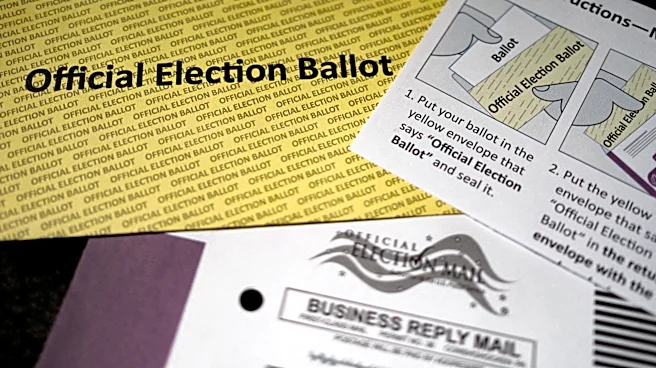
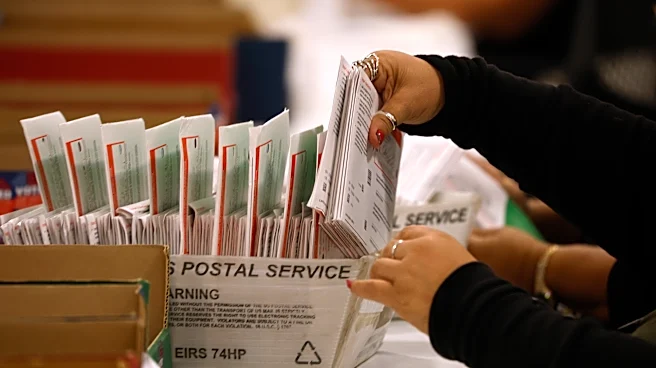
An anonymous whistleblower has raised concerns regarding the U.S. Postal Service's (USPS) preparedness to implement President Trump’s executive order. This order mandates that the USPS only transmit mail ballots to individuals listed on a federal registry
of citizens. The whistleblower suggests that the USPS is currently ill-equipped to handle this directive, potentially leading to significant disruptions in mail-in voting for the upcoming midterm elections. This development comes as the Supreme Court has allowed President Trump's mail-in ballot order to take effect, adding urgency to the concerns about the USPS's capacity. The potential for widespread issues in mail-in voting could impact the integrity and efficiency of the electoral process, particularly given the increasing reliance on mail ballots in recent elections.
Why It's Important?
The potential disruption to mail-in voting, as warned by the whistleblower, carries significant implications for U.S. politics and society. Mail-in voting has become a critical component of the electoral process, especially in recent years, offering accessibility and convenience to millions of voters. If the USPS is indeed unprepared to comply with President Trump's executive order, it could lead to delayed ballots, disenfranchisement of eligible voters, and a general loss of public confidence in the election system. This situation could exacerbate political polarization and fuel debates over election security and voter access. The integrity of midterm elections is paramount for democratic stability, and any systemic issues with ballot delivery could have far-reaching consequences on election outcomes and public trust in governmental institutions. The executive order itself, by restricting mail ballot transmission to a federal list of citizens, introduces a new layer of complexity and potential for administrative bottlenecks.
What's Next?
In the immediate future, attention will likely focus on the USPS's response to the whistleblower's claims and any measures they plan to implement to address the concerns about their readiness. Election officials at state and local levels will need to assess how these potential disruptions might affect their specific jurisdictions and develop contingency plans to ensure all eligible votes are counted. Legal challenges to President Trump's executive order or its implementation could also emerge, further complicating the situation. Additionally, Congress may become involved, potentially holding hearings or introducing legislation to clarify the USPS's role in federal elections or to provide additional resources to ensure a smooth voting process. The public and various advocacy groups will likely monitor the situation closely, advocating for solutions that protect voter access and election integrity ahead of the midterm elections.
Beyond the Headlines
Beyond the immediate logistical challenges, this situation highlights deeper issues concerning federal oversight of elections and the balance between executive power and electoral administration. The executive order, by imposing a federal list requirement, touches upon states' traditional authority over election procedures and raises questions about federal intervention in what has historically been a state-managed process. This could set a precedent for future federal involvement in election mechanics, potentially leading to ongoing conflicts between federal and state authorities. Furthermore, the reliance on an 'anonymous whistleblower' underscores the internal tensions and concerns within federal agencies regarding politically charged directives. The incident also brings to the forefront the ongoing debate about voter access versus election security, with different stakeholders emphasizing one over the other, potentially leading to further legislative and judicial battles over the future of voting in the U.S.