






What's Happening?
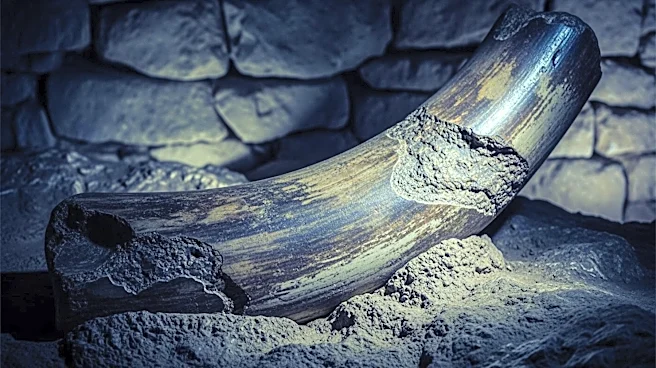
Paleontologists have uncovered a significant collection of Ice Age megafauna in an underground stream in Central Texas, prompting a reevaluation of the region's ecological history. The discovery, detailed in the journal Quaternary Research, includes fossils
of a giant tortoise and a lion-sized armadillo relative, Holmesina septentrionalis, neither of which were previously known to inhabit the Edwards Plateau. The findings emerged from a multi-year study initiated by local spelunker John Young, who first photographed the bones in Bender’s Cave. The research team, led by John Moretti from the University of Texas at Austin, conducted six visits to the site, collecting fossils from 21 sampling zones. The presence of these species, which are typically associated with warmer climates, contradicts the established understanding of the region as a cool, dry grassland during the last glacial period.
Why It's Important?
This discovery is significant as it challenges the existing paleoenvironmental record of the Edwards Plateau, suggesting that the region may have experienced warmer and more humid conditions than previously thought. The presence of species like the giant tortoise and Holmesina septentrionalis indicates a potential window into a warmer period, possibly the last interglacial period, which could reshape scientific understanding of the region's prehistoric ecology. This finding could have broader implications for the study of climate change and its impact on species distribution. The research highlights the importance of reevaluating historical ecological data and may lead to new insights into how ancient climate conditions influenced the distribution of megafauna in North America.
What's Next?
Researchers are now focusing on uranium-thorium dating of cave mineral formations on the fossils to obtain a more reliable minimum age for when the bones entered the cave system. This method could provide a clearer timeline for when these animals lived in Central Texas, offering further insights into the region's ecological history. The study's findings may prompt additional investigations into other Late Pleistocene sites across Texas to reassess the presence of similar species and environmental conditions. The scientific community may also explore the implications of these findings for understanding past climate variations and their effects on biodiversity.