



What's Happening?
A recent study highlights the increasing risk of catastrophic collisions in low Earth orbit due to the proliferation of satellite mega-constellations. The study, led by Sarah Thiele and her team, reveals that close approaches between satellites occur
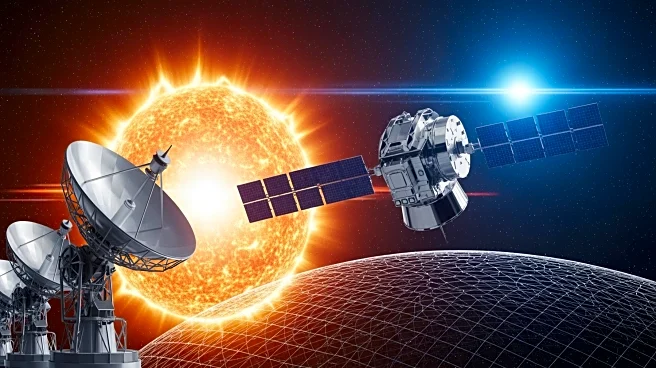
every 22 seconds, with Starlink satellites experiencing such events every 11 minutes. The study warns that solar storms exacerbate these risks by increasing atmospheric drag and causing navigational disruptions. During the 'Gannon Storm' of May 2024, over half of all satellites in low Earth orbit had to perform evasive maneuvers. The study introduces the Collision Realization and Significant Harm (CRASH) Clock, indicating that a loss of control over satellite maneuvers could lead to a catastrophic collision in just 2.8 days.
Why It's Important?
The findings underscore the fragility of current satellite systems and the potential for a Kessler syndrome scenario, where space debris could render Earth's orbit unusable. This poses significant risks to global communications, navigation, and space exploration efforts. The study highlights the need for improved real-time control and feedback systems to manage satellite operations during solar storms. The potential loss of satellite infrastructure could have far-reaching impacts on industries reliant on satellite data, including telecommunications, weather forecasting, and national security.
What's Next?
The study calls for urgent measures to enhance satellite resilience against solar storms and improve collision avoidance systems. Stakeholders, including satellite operators and space agencies, may need to invest in advanced technologies and protocols to mitigate these risks. The potential for stronger solar storms, akin to the historical Carrington Event, necessitates proactive strategies to safeguard satellite infrastructure and ensure continued access to space.
Beyond the Headlines
The study raises ethical and regulatory questions about the rapid deployment of satellite mega-constellations without adequate risk assessments. It highlights the need for international cooperation to establish guidelines and standards for satellite operations in low Earth orbit. The potential for space debris to impact future generations underscores the importance of sustainable space practices.