







What's Happening?
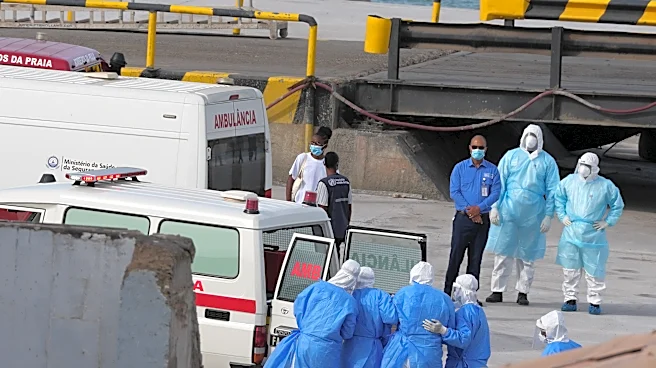
The World Health Organization (WHO) is closely monitoring a hantavirus outbreak involving the rare Andes strain, which has been identified on the Dutch cruise ship MV Hondius. The ship, carrying 146 people, arrived in the Canary Islands after three passengers
died and eight others fell ill. The Andes strain is notable for its ability to spread from person to person, unlike most hantaviruses that typically transmit from animals to humans. This strain is associated with hantavirus pulmonary syndrome, which can lead to severe respiratory issues. Virginia Tech researchers have identified hotspots of hantavirus circulation in wildlife across Virginia, Colorado, and Texas, with 15 rodent species acting as carriers. The outbreak underscores the global vulnerabilities in interconnected travel networks and the need for proactive research on zoonotic viruses.
Why It's Important?
The hantavirus outbreak on the MV Hondius highlights significant public health challenges, particularly the potential for zoonotic viruses to spread rapidly in a globally connected world. The ability of the Andes strain to transmit between humans raises concerns about the adequacy of current public health models and preparedness for pandemics. The outbreak serves as a reminder of the importance of early detection and containment to prevent widespread transmission. The high mortality rate associated with the virus, especially in regions like southern Chile, emphasizes the need for international coordination and rapid response to protect public health.
What's Next?
The WHO and other international health organizations are likely to increase surveillance and research efforts to better understand the transmission dynamics of the Andes hantavirus. There may be calls for enhanced monitoring of wildlife reservoirs and human populations in affected areas to prevent further outbreaks. The situation could prompt discussions on improving global health infrastructure and preparedness for emerging infectious diseases. Additionally, the outbreak may lead to increased collaboration between countries to develop effective containment and treatment strategies.