







What's Happening?
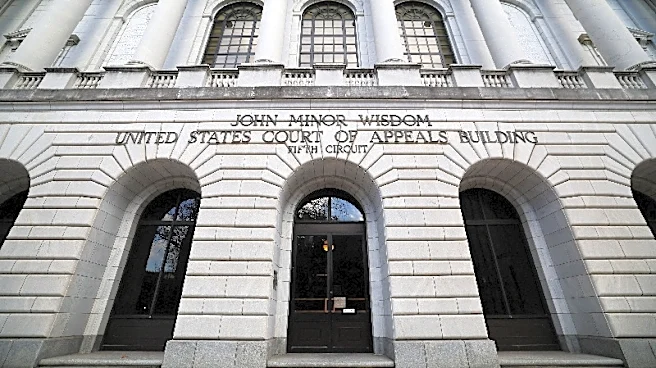
The Trump administration's policy on mandatory detention for undocumented immigrants is moving closer to a potential review by the U.S. Supreme Court. This policy, which has been a cornerstone of the administration's mass-deportation agenda, has led to a split
among federal appeals courts. The Fifth and Eighth Circuits have upheld the policy, while the Second, Sixth, and Eleventh Circuits have ruled against it. The policy interprets the Immigration and Nationality Act to deny bond hearings to undocumented immigrants apprehended within the U.S., a departure from nearly three decades of practice. This has resulted in an increase in the number of people detained, with over 60,000 individuals currently in Immigration and Customs Enforcement custody. Legal experts suggest that the Supreme Court is likely to take up the case due to the circuit split, which could have significant implications for millions of noncitizens living in the U.S.
Why It's Important?
The potential Supreme Court review of this policy is significant as it could redefine the legal landscape for undocumented immigrants in the U.S. The policy's interpretation of the Immigration and Nationality Act affects the liberty of noncitizens, as it denies them the opportunity to argue for their release in immigration court. This has broader implications for constitutional interpretations regarding arbitrary detention. The outcome of a Supreme Court decision could either reinforce or dismantle a key component of the Trump administration's immigration strategy, impacting the lives of thousands of immigrants and the operations of immigration enforcement agencies. The decision could also influence future immigration policies and the balance of power between federal and state jurisdictions in immigration matters.
What's Next?
Advocates and the government are currently weighing their litigation strategies, with deadlines approaching for petitions to the Supreme Court. The Fifth Circuit has already rejected a rehearing request from immigrant advocates, and they have until early July to seek Supreme Court review. The Eighth Circuit's deadline for a rehearing petition is imminent. The administration may choose to transfer more detainees to jurisdictions that have upheld the policy, such as Texas, to strengthen their position. However, the administration might also consider the Supreme Court's recent immigration-related decisions, which could influence their decision to pursue a review. The outcome of these strategic decisions will determine the next steps in this legal battle.
Beyond the Headlines
The case highlights the complexities and ambiguities in U.S. immigration law, which have allowed for varying interpretations and enforcement practices. The policy's focus on statutory interpretation underscores the challenges in balancing national security concerns with individual rights. The legal debate also touches on broader issues such as due process and the role of agency interpretation in shaping immigration policy. The case could set a precedent for how similar legal ambiguities are addressed in the future, potentially influencing legislative reforms and the judicial approach to immigration law.