


What's Happening?
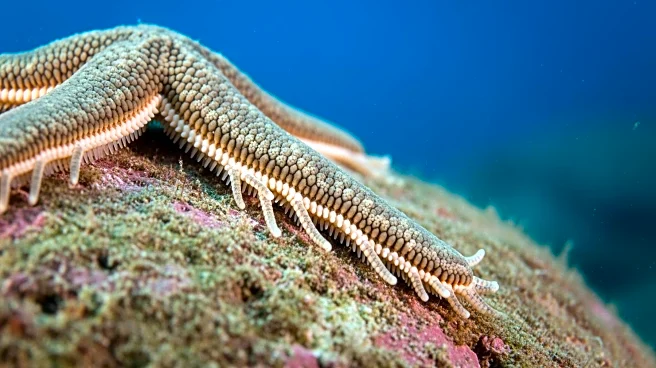
A recent study has explored the unique dynamics of sea star feet, focusing on their mobility and adhesion mechanisms. The research highlights that a sea star foot functions as a viscoelastic disc attached to a stem, which acts like a hydraulic piston.
When the foot makes contact with a surface, it secretes a protein-containing adhesive substance for temporary attachment. Muscle contractions then retract the stem to detach the foot. The study utilized a custom-built glass aquarium and advanced imaging techniques to observe these processes in real time, particularly focusing on the common sea star species, Asterias rubens.
Why It's Important?
Understanding the mechanics of sea star feet can have broader implications in the fields of biology and applied physics. The insights gained from this study could inform the development of new materials and technologies that mimic biological adhesion and movement. Such biomimetic applications could be valuable in designing advanced robotics, medical devices, and other technologies requiring precise and adaptable adhesion capabilities. Additionally, this research contributes to the fundamental understanding of marine biology and the evolutionary adaptations of sea stars.